Tag: recipe

A Good Day Out

A Good Day Out

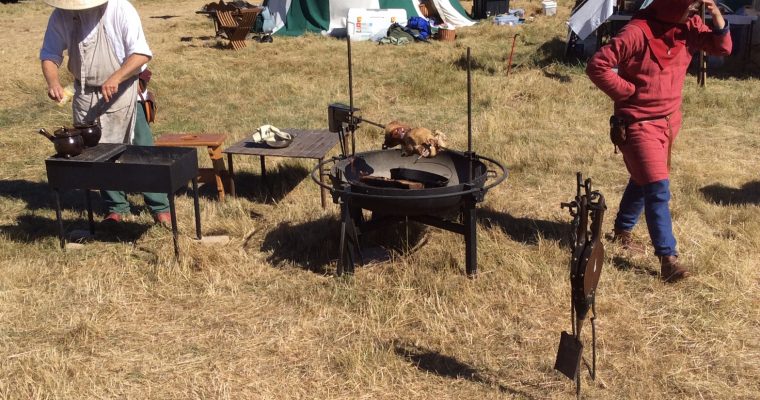
So, we had a single-day SCA event today, a local one. Just a few miles from the house, so of course that meant we had to fill the car with stuff. Sunshade, chairs, tables, small ice chest, my Microkitchen…you know, the bare essentials. There was 

Parte The Last…

Parte The Last…

…in which our brave hero, having deciphered the cryptic manuscript, quested for and received in turn the most necessary Ingredient, and followed all the steps of the Dance Culinaire, does finally put the pieces together and assemble the Dish at Last. Well. Yeah. We did 

We are committed, and that’s no lye!

We are committed, and that’s no lye!

I love much about my job. Especially on days like today, because you see, I have a flex schedule, and 4 ten hour days, meaning Fridays off every week. This is relevant because when you have a big project, like doing 72-hour short ribs in the sous vide, or are lye-soaking octopi for a 400 year old recipe (as one does), that extra day gives you time to get through it.

And that’s where I am today. I collected some ash from other cooking fun I’ve had and then hummed the MacGyver theme a few times for inspiration while I whipped up a rig to get lye from those ashes.

Okay, mandatory safety note here. Lye isn’t to be trifled with. It’s a highly reactive chemical substance, and yes, you can hurt yourself (or other things) with it if you don’t know what you’re doing. It’s entirely possible, if you do things wrong here, to suffer severe chemical burns…like in your eyes. Am I scaring you a little? Good! As it happens, I’ve had a pretty solid chemistry education, and yes, I took it carefully. Please do the same if you’re going to try this.

Good reason never to get rid of old plastic buckets or t-shirts!

Then, as you might recall from the last post, I made up a red cabbage tea which has the useful property of changing color to react to pH. What I’m aiming for is a pH of about 10 (lutefisk ranges from 10-ish to 12…and remember, for every whole number higher, the strength of the base is 10x more). So that’s a decently large target to hit. I am aiming low because our recipe warns us to not make it too strong or it will eat our octopus and make our Lord mad. I presume it’s because octopus would have to be caught, cleaned, dried well, then shipped 400 miles overland. Pricy! Also, dried octopus doesn’t seem like it would be as sturdy as dried blocks of cod or other whitefish. So, not so high on the pH!

By the way, a shoutout to my parents, who got me my first chemistry set, BeeZee Smith, my first county librarian who showed me the science books, and to Mr Koehl, Mr Lemon, Doctor Postma, and Doctor Ball, all of whom taught me more chemistry. This valence is for you!

Back to the project. I ended up with about a quart of slightly ashy, ugly water. I put a scant quarter cup of it into a Pyrex bowl. I added about a quarter teaspoon of my red cabbage tea. Isn’t it pretty?

And voila!

See that greenish color? That’s a pH 10 for you! Okay, not as pretty as if the lye had been absolutely clear, instead of murky, but it’s definitely green, so we are pretty much in our target. Knowing now that it wasn’t yellow, meaning pH 11 or higher (and thus, very dangerous), I dared put a fingertip into it, and rubbed fingers together. Yes, it had that tell-tale soapy feel (yes, of course I washed my hands after). And not blue, which would be about baking-soda-strength.

This is a weak lye solution! Exactly what we wanted. Now, I need to mention that as far as anyone knows, the cabbage tea test is NOT a medieval test. Odds are, their tests if any, were just a matter of experience…something along the lines of “Go get some lye from the washer-women when they make soap, and pour water into it until it feels right.”

And that’s the trickiest part all solved and ready to go. If it had been too weak, concentrating it safely would have been a problem. With that covered, there was only one thing more I could do…

Put the octopus in to soak in cold water. The recipe says change it several times and I’ll definitely do that (helps to remove salt)…but I won’t leave it out on the counter. It’s safer in the fridge, I think. And now we wait. According to the timeline I’ve built for this recipe, the next step (besides changing the water out) will be Saturday, before I go to bed. I’ll let the somewhat rehydrated octopus bathe in the lovely lye-water overnight, then. Sunday morning it gets rinsed, boiled in clean water, peeled as necessary, and spit roasted with olive oil and black pepper.

Octopi, in for a two day Pipkin-soak

See you in two days!

Day Three—Friday

Day Three—Friday

Yeah, now I was hitting my stride. So was everyone else. Friday at the War for the Cooks’ Camp generally means Fish Friday (so very medieval), though there’s no requirement to do it if you’re not into fish. Since dried octopus wasn’t to be found 

Been a while since I’ve posted…

Been a while since I’ve posted…

But I wouldn’t want you think I’ve been ignoring this blog. No, I’ve been getting ready for an event that’s fairly important to me, and now that the event has come and gone, I can write about it. You see, this past week (well, five 

Purely for the amusement value

Purely for the amusement value

When I tell the story of how the Transylvanian Cookbook came to be, I make sure to mention the first translation of the recipe titles. Not having anyone handy who read fluent Hungarian, we fed the webpage listing all the recipe titles into Google Translate (you did know, right, that in addition to translating word by word, you can copy/paste the URL for a particular webpage into a Google Translate and it will do its best to translate it into whatever language you select? Just make sure to give it a few seconds, it can take time).

In any case, that’s where “Grim Reaper Cow Beef Juice” came from, for the second beef recipe (“Beef with Harvest Sauce”). But Google’s translation software DOES learn, and you no longer get Grim Reaper Cow Beef Juice. It’s now “Cow milk with cow’s milk”, which in some respects is even stranger, though less evocative.

So I made sure to archive a copy of all the Google-translated titles, lest I wake some morning to find that Google has achieved perfect idiomatic translation, and the humor would be lost. That would be a shame.

Enjoy the PDF! Do you have a favorite?

Google’s Translation of the Titles

3.0 Inbound!

3.0 Inbound!

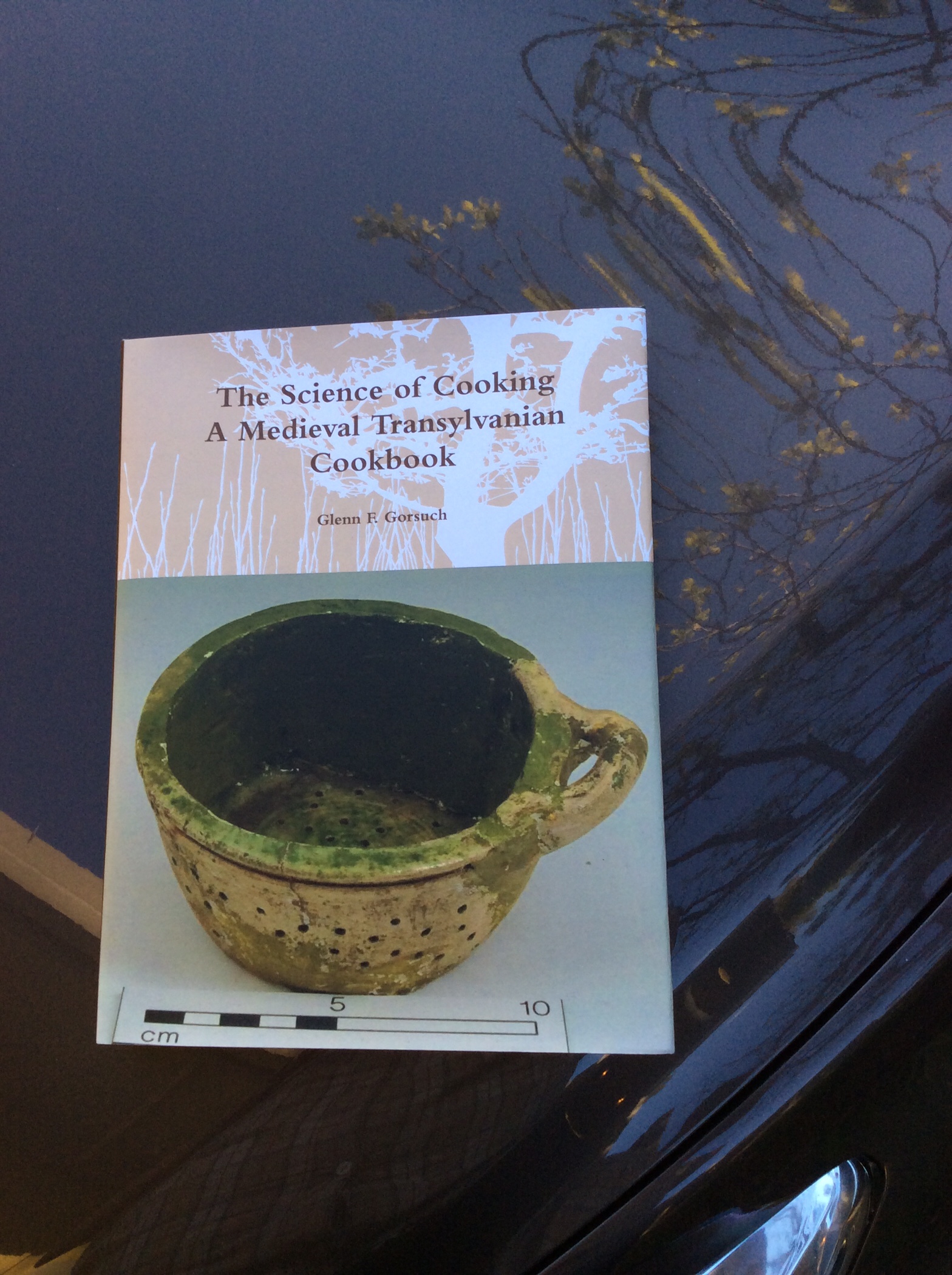
So, what with all the SCA wonderful weirdness hitting my life this second, I felt the need to actually wrap up the 3.0 edition of the Transylvanian Cookbook. This is, realistically, probably the last major update I’m going to do. If I start doing more 

A tale of two weekends…

A tale of two weekends…

So. Last weekend we had a local SCA event. I was going to keep it simple. I was going to reprise those fried cheese sticks because yum, and a bunch of friends wanted to try them, and I was also going to do the Bird 

March Hare, and other tasty treats

March Hare, and other tasty treats

So, this weekend was March Crown, a West Kingdom (SCA) event wherein the next Queen and King are chosen via combat, and of course, inspiration. More to the point, we also have a cooking competition. By the way, you can skip this part if you know how this all works. Or you don’t care.

I don’t actually like to think of it as a competition, actually, unless you’re challenging yourself. All the entrants get some sort of recipe criteria, whether it’s make a dish from this medieval source, or some medieval dish involving ingredient X or technique Y. The award is just a simple token, in this case a Wooden Spoon, sized usually to wear around the neck. And this is a fairly common contest format for cooking. Actually, I run these currently for the Principality of Cynagua, a sub-group of the West Kingdom.

But yeah. I haven’t actually entered one for a while, mostly because my attendance at last year’s events was severely curtailed by stupid car trouble. And the criteria this time (make a dish from the Viandier of Taillevent, a mid-medieval French source wasn’t so wide open as to give me fits on what to write, but neither was it so limiting as to be a straightjacket. And I hadn’t seen, face to face, a bunch of my friends that would be going to this event, in some time.

But as the event go closer, the weather reports got worse for the weekend. And while I’m no shrinking violet, cold, wet, windy events, where you have to find the time and space afterwards to dry the canvas of your pavilion, are a real pain.

Ah, but this event was being held in a town, where there were hotels! So I went that route. That meant I could take the car, with better gas mileage. It also meant no room to pack along my whole medieval kitchen setup, which I’ll show you someday.

Very well, thought me. This is a great opportunity to try out my Microkitchen, an obsessive little project of mine wherein I try to cram as much functional kitchen gear needed to make nearly anything, and keep it in the space of…well, about the size of an American Football, right now. It’s based on a Swedish Trangia mess kit, WW II edition, and I’ll talk about it sometime too. ‘Cause obsessive.

Okay, those of you who care about the cooking can come back now.

So I picked three recipes from Taillevent to try.

Now, if I were serious about this, as in a serious competition thing, I’d have tried it several times in advance, written up copious notes, and worried greatly about using a medieval an ingredient set as possible. This one was to be participant judged, and I would be just as happy if someone else won.

———–

90. Hulled barley gruel.

If it is not hulled, prepare it. Pound it well (like wheat) in a mortar, cook it, drain it, and boil it with almond milk, salt and sugar. Some crush and sieve it. It should not be too thick.

18. Ragout of small birds or whatever meat you wish.

Fry very well in lard. Take grilled bread, steep in beef broth, sieve, and put with your meat. Grind ginger, cassia and a bit of verjuice, and boil together. It should be delicate and not too thick.

186. Stuffed tubes.

If you wish to make some stuffed tubes, have good harvest cheese in strips as fat as your finger. Coat them in the batter for Small Crisps, insert them into your hot lard, and keep them from burning. When they are dry and yellowish, set them out with the Crisps.

And, for those of you who want the batter for Small Crisps:

185. Large and small crisps.

Cook the large crisps in some hot lard in a syrup pot or brass casserole. Make them from egg whites and fine flour beaten together. It should not be too thick. Have a deep wooden bowl, put some batter in the bowl, and shake the hand inside the pan above the hot lard [pouring batter into the lard]. Keep them from browning too much.

Cook the small crisps in an iron pan. Beat egg yolks and whites with some fine flour. It should be a little stiffer than the batter for large crisps. Have a little fire (as long as it is hot). Take your wooden bowl pierced at the bottom, and put some batter in it. When everything is ready, pour [a thread of batter from the hole in the bowl] and form it into the shape of a small buckle (or larger), with a kind of tongue of the same batter through the buckle. Let them cook in the lard until they are plump.

So, here’s how I interpret medieval recipes. Your method may vary.

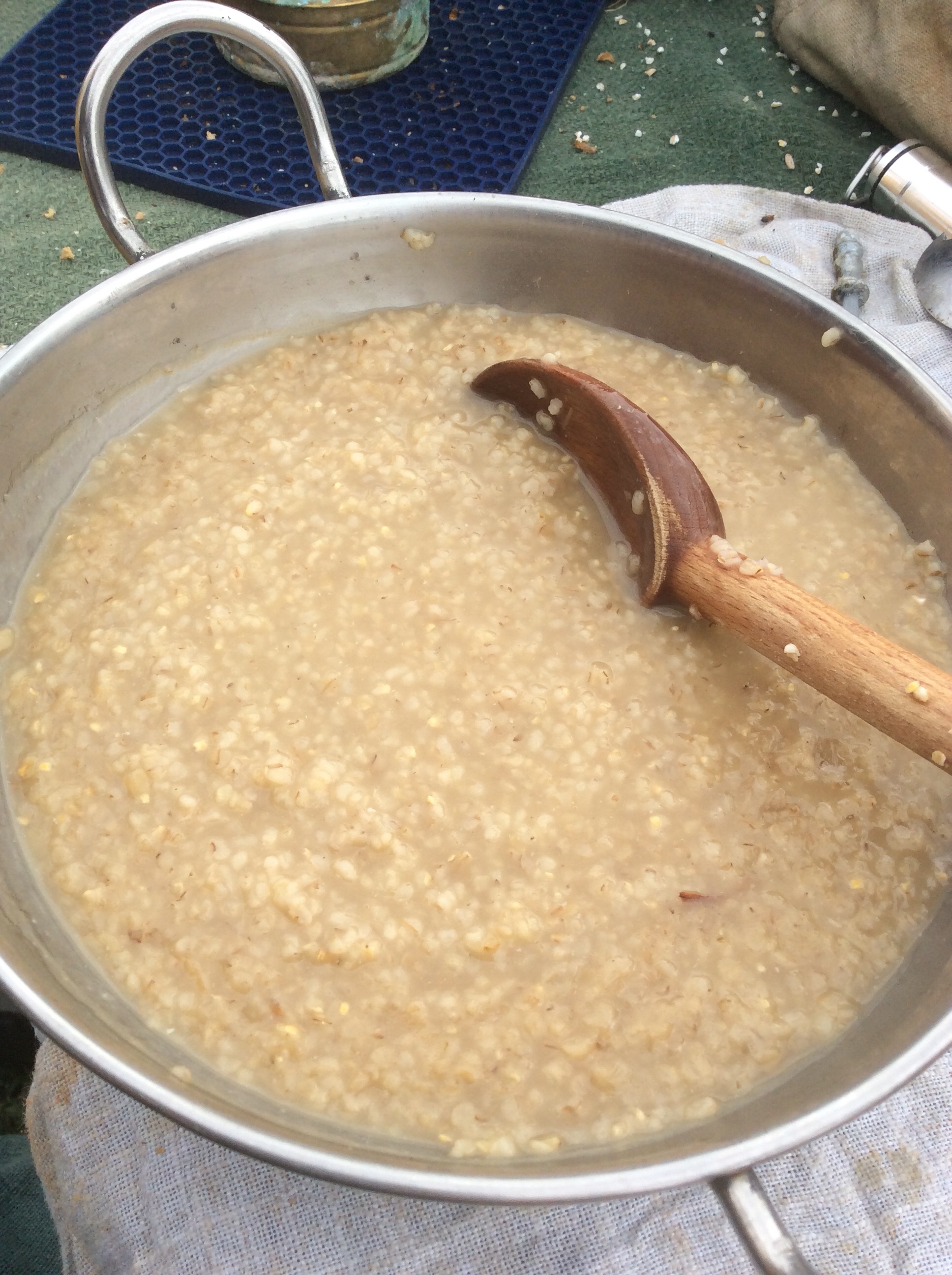
Looking at the first, not much challenge to it. It calls for hulled barley, which is to say, the pearl barley we get in the stores. And then, uncharacteristically for medieval recipes, tells us exactly what to do with it, IN ORDER. Now, even though I’m cooking this in a stainless steel mess kit over an alcohol burner, I try to view how this works through what I know about period kitchens. Using coals, ceramic pots, and temperature control being a matter of how far you were from the heat. Yep, still works. Using a period setup would also keep the food from burning and sticking on the bottom. The sugar I used (and almost always use for medieval recipes) is those brown cones of mostly raw, unrefined sugar. It’s a close match in taste, consistency, and format for what they used in period. So I always have some in the house. Almond milk? NEVER EVER use the stuff from a box. Bleah. Soak your almonds over night in water, rub off the skins the next day, then grind them up one way or another. For the richest milk, use equal parts almonds to water, let them soak a while, then strain out the almond milk. Doing this will HUGELY impact the quality of your end result. And it’s not hard.

End result? Barley-based breakfast oatmeal. Really. I liked it, but there was about as much zing to it as regular oatmeal. Sadly, this is all I actually got entered into the competition. You saw that header picture? Yeah, that rolled in, just as I finished the barley gruel, and we had intense, SERIOUS rain for about 20 minutes. I got my stuff covered in time, mostly, but since I wasn’t CAMPING, I couldn’t precisely have a place to cook out of the weather.
But.

It didn’t STAY raining. The competition part was over (and the right person, who was not me) won with a rabbit bisque (see title of this article) which was awesome. But I still had a cooler full of stuff to play with, and darned if I wasn’t going to do my other two recipes. And I wanted lunch!

So, recipe two and three both were to be fried in lard. Again, if I’d been serious I absolutely would have rendered my own lard and used that. It DOES make a difference in final taste. Instead, I used a bottle of canola oil I had on hand. High smoke point, neutral flavor.

For reasons, I started with the stuffed tubes. Yes, you’re reading that recipe right. Fried cheese. Nothing wrong with that. It says harvest cheese, which is a common way to say “some nice, tasty cheese that isn’t specifically named, and isn’t probably a fresh farmer’s (green, unaged) cheese.” The trick is picking a historically correct cheese to use! Thankfully, I have some pretty good notes from a class a while back. Muenster dates to that time and place and it’s one I like, and could pick up without hunting for it. Cut it into tubes the size of my large fingers. Yes, I was tempted to make them smaller–that’s a lot of cheese, but as you’ll see, glad I didn’t.

The batter could have been tricky. The recipe doesn’t call for multiple dunks, so you need a thick, sticky batter, and since I didn’t want to go back and forth with eggs and flour to make tons, I beat up a couple eggs, and slowly blended in spoonfuls of flour, mixing well before adding the next, until I got a batter that was thick, sticky, and yet could drip, albeit slowly as is called for in the small crisps recipe. It was around 1/3 cup of flour to two large eggs.

At this point the oil was hot enough to brown a piece of bread in 15 seconds or so. The alcohol burner was working better than I thought it would! Cheese blocks into the batter, rolled to coat, then into the hot oil. FWOOP! The crust set and puffed instantly.

The recipe says to make these big (finger size), and tells us to make them yellow (golden) in color. The temptation was to take them to a full golden brown. Nope. Don’t do it. If it brown, you’re going to have molten cheese erupting into your hot oil. Keeping them big gives them time to not completely melt, retain shape, and if you don’t cook them too long, you get stuffed tubes.

Only change I’d make? Some salt in the batter, or a saltier cheese. But I will make this again. Yum.

Last dish…fried meat or small bird in some bread-thickened seasoned beef broth.

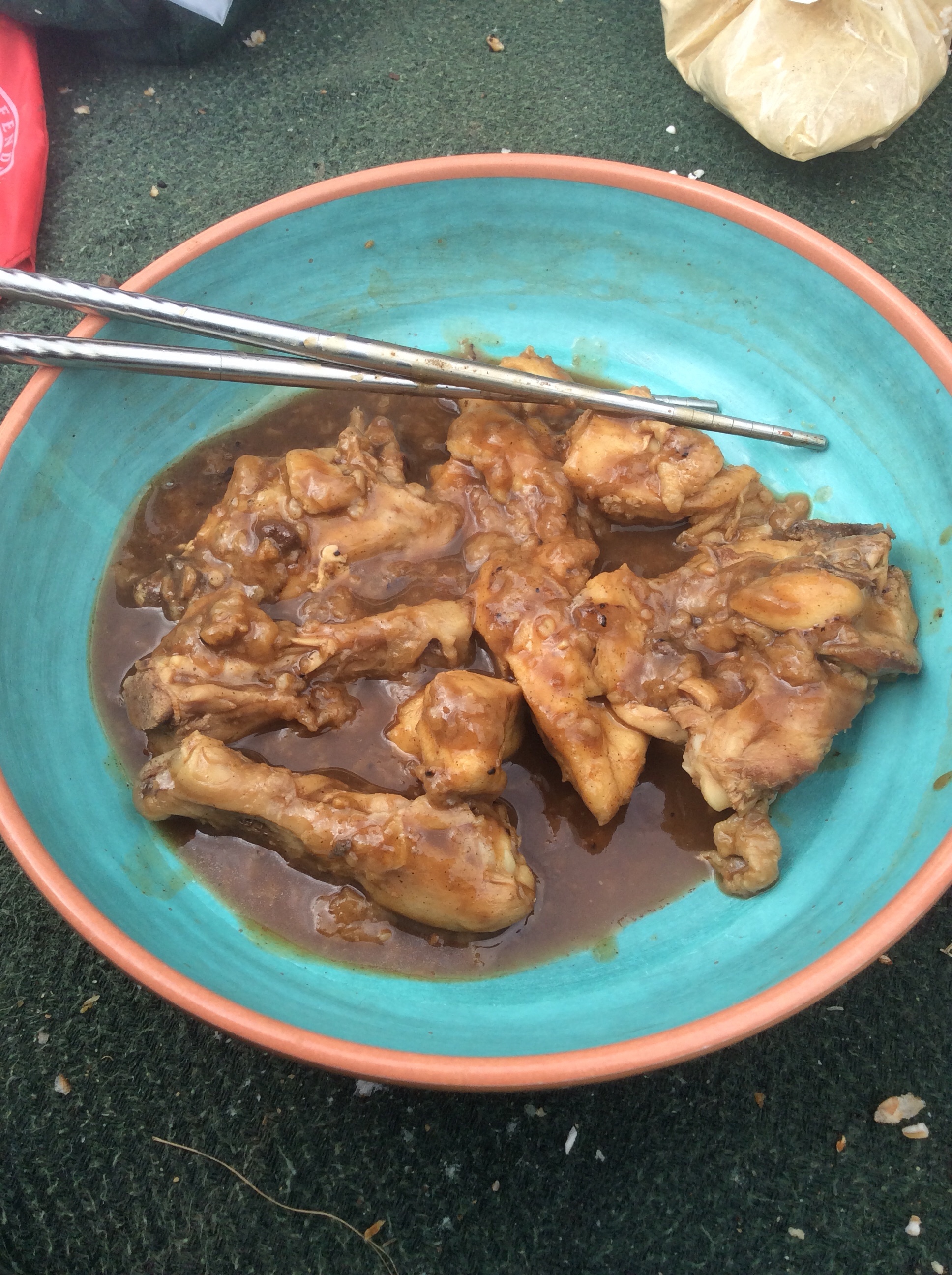
Since I’m not going to go catch a basket of larks, I grabbed a Cornish game hen. Cut it up the way you would a full sized chicken with thighs, legs, and breasts. Fried them in the oil from the stuffed tubes, and set them aside. Then I grilled some bread over the burner until it was well toasted, and cut off the crusts. Made about four cups of beef broth using Better Than Bullion (again, for seriousness, I’d make a completely from scratch broth), and brought it to a boil with the bread ripped up into it. Not having a sieve to push the bread and broth through to make a paste to thicken said broth, I stirred and mashed with a spoon until it was thick and pretty smooth. Added in some powdered ginger and cinnamon, added a splash of verjus (the juice of unripe grapes), and the game hen pieces.

Pretty tasty, though I caught the flavors of cinnamon and ginger at unexpected moments, and I think the broth reduced too much, because it was a tad salty. Worth doing again, but I bet lamb would taste great with the sauce.
And to use your túró

And to use your túró

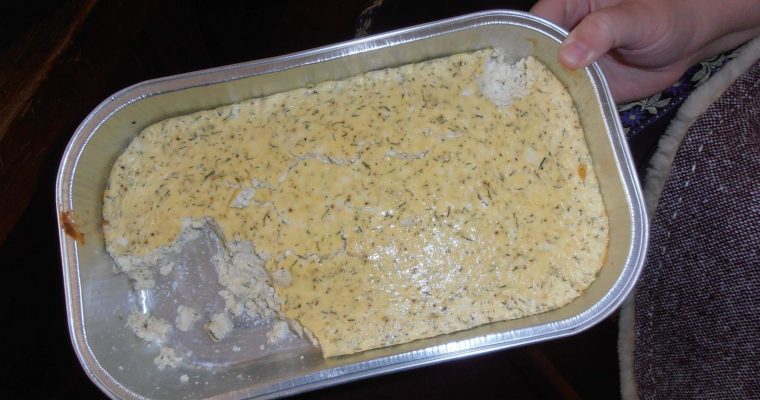
So, supposing you have gone to the trouble of making a batch of túró (not that it’s hard or all that troublesome).  What to do with it? Túró cake Crush the túró, whip some eggs, then add some dill, sour cream and butter.  and Dish 

Next recipes—Fellorium From Eggs, and Túró cheese

Next recipes—Fellorium From Eggs, and Túró cheese

The only cheese actually specified in The Science of Cooking is “túró”.  After hunting around for a description, I finally was able to get one from one of my translation checkers, who describes it as a very mild, unaged cheese  with no real curd formation, 

So, the first recipe to post

So, the first recipe to post

So, if you know the story of how the Transylvanian Cookbook came to be in English, you’ll know the recipe title “Grim Reaper Cow Beef Juice” figured prominently in my decision to make it happen.  I mean, I WANTED to know what that was.  (Proper, non-Google translation of the title is “Beef with Garlic Harvest Sauce”).  And that garlic harvest sauce shows up in a great many of the recipes in that cookbook.  Good reason, it’s delicious!  And so, here’s my interpretation of it:

Twelfth. Pork with harvest sauce.

Prepare the pig like I told you to. After the meat is tender, slice some onion and parsley leaves. When serving it, make harvest sauce. Don’t forget to add spices.


Which would help more if you knew the rest of the cookbook.  This is more effective:

Veal with harvest sauce.

Do the same like I told you. Boil the meat, add some onion, parsley roots and when it’s done, slice some parsley leaves too, when it’s done and you’re about to serve it whip some eggs in vinegar, pass the broth through a strainer into a bowl, whip it so that the eggs won’t shrink the hot broth; put this vinegar egg sauce on the meat, serve at least three or four slices.

The instructions for the beef version( which is first in the cookbook) also talk about adding black pepper.

So, I roasted the shoulder of a pig in a Dutch oven, nothing special but some onions, salt and pepper with it.  Left the lid on, because I wanted it to make broth.  After about four hours at 325, it came out, and I simmered some chopped parsley roots and a celery root in the broth, puréed them there ,and then it was allowed to cool, and was refrigerated.  The broth was cooled too, so that the next day I could easily peel off the fat and discard it.

When came time to serve at the Symposium Friday potluck, I sliced and reheated the roast, and made the sauce.  First, I beat 6 large eggs with about a cup of white wine vinegar and a tablespoon or so of black pepper.  Then I tempered it into the slowly reheating pork broth which was about 4 cups in volume.  As a note, this would be much easier in a ceramic pipkin with its temperature control.

Once the broth and eggs were together, I continued heating, not allowing it to boil, and kept stirring until the sauce was creamy and thick.  Then I poured it over the pork and served it.  I admit, I forgot to add the chopped fresh parsley over top.


Wait, why the celery root?  The roots add body and a small amount of flavor to the broth, the way a non-medieval russet potato might.  But parsley roots are hard to come by, and the flavor after cooking isn’t all that strong, so I went with a similar effect with only a few parsley roots and a celery root.  Parsnips would have worked too.