Tag: Transylvanian

How to Avoid My Blathering

How to Avoid My Blathering

So far, all of you have been very kind and not told me to “Shaddap”, because I know I can get rather long winded, especially when my “Obsession” button has been pressed. To reward you for your patience, I have here a guest poster, a 

A Good Day Out

A Good Day Out

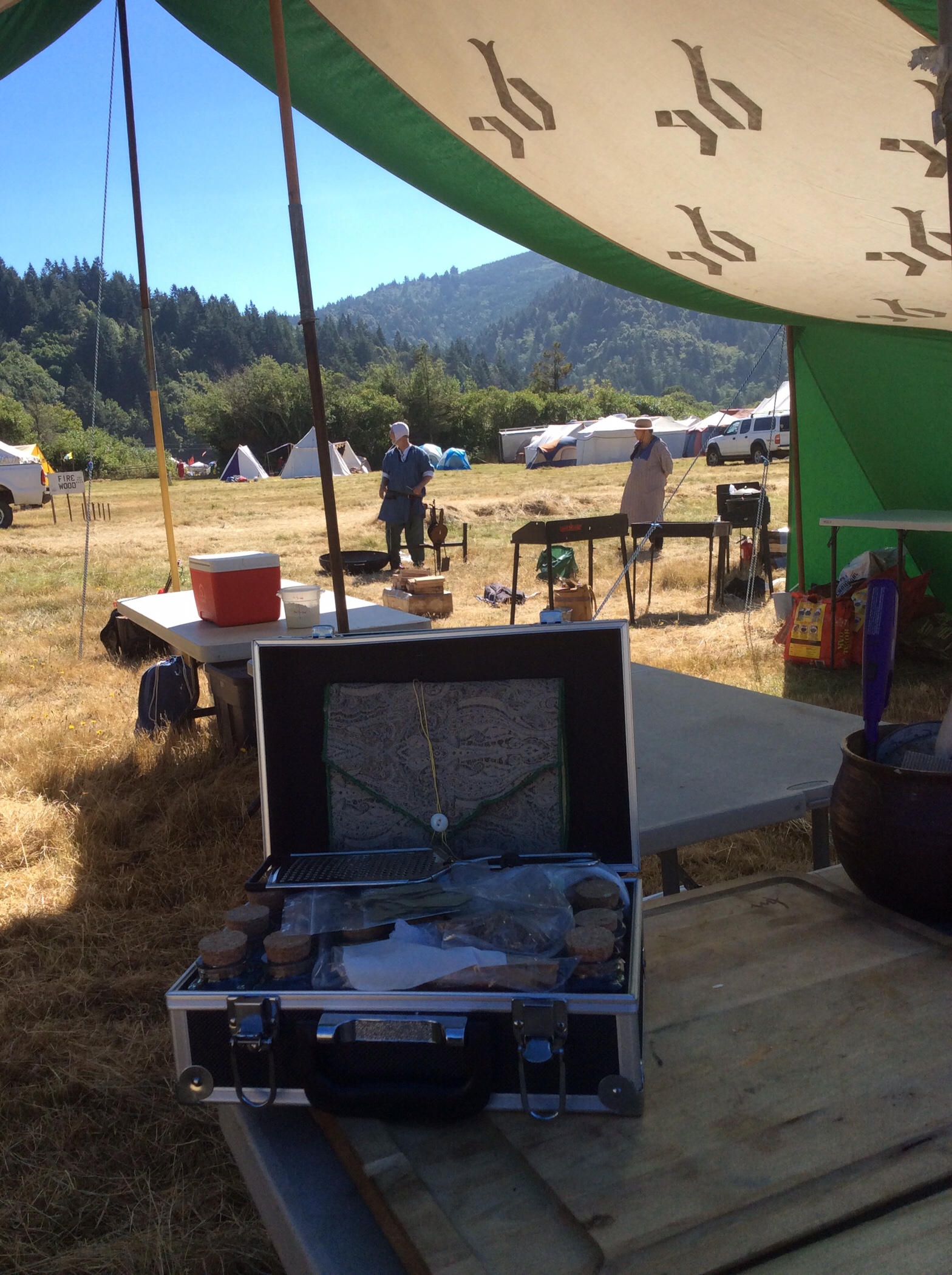
So, we had a single-day SCA event today, a local one. Just a few miles from the house, so of course that meant we had to fill the car with stuff. Sunshade, chairs, tables, small ice chest, my Microkitchen…you know, the bare essentials. There was 

Parte The Last…

Parte The Last…

…in which our brave hero, having deciphered the cryptic manuscript, quested for and received in turn the most necessary Ingredient, and followed all the steps of the Dance Culinaire, does finally put the pieces together and assemble the Dish at Last.

Well. Yeah. We did this. Octo-lutefisk has been made and consumed. No one died in the making of this except some cephalopods, who were already deceased before I conceived this mad notion. Let’s recap, shall we?

(413) Octopus in a different way.

Wash the octopus in three pots of water, then let it soak in clean water for two days, but change the water frequently, especially in the summer, elsewise it will go bad. Once you put it in a new pot of water, wash it. Once two days have passed, make some alkali out of ash, but don’t make it too strong, for that will devour the fish, and your lord will be angry with you.

Let the alkali cool, and put it in the same pot with the octopus, let it stand for one night, then boil it in clean water, pass through a strainer the water, put it in cold water, and keep it with ice in the summer so that it will not go bad. Once you’re about to cook it, remove the black skin, put it on a skewer, roast it, paste it with tree oil. Once done, put it on a skewer and add some black pepper, then serve it while it’s hot.

So, we acquired said dried octopus. We rinsed it off in three pots full of water before letting it soak in the fridge for two days, changing the water about every 8 hours. We then made lye, determining a pH of 10 or so would be a good starting point, and found happily what we made from wood-ash was about the pH we wanted, testing it with a cool hack involving red cabbage juice.

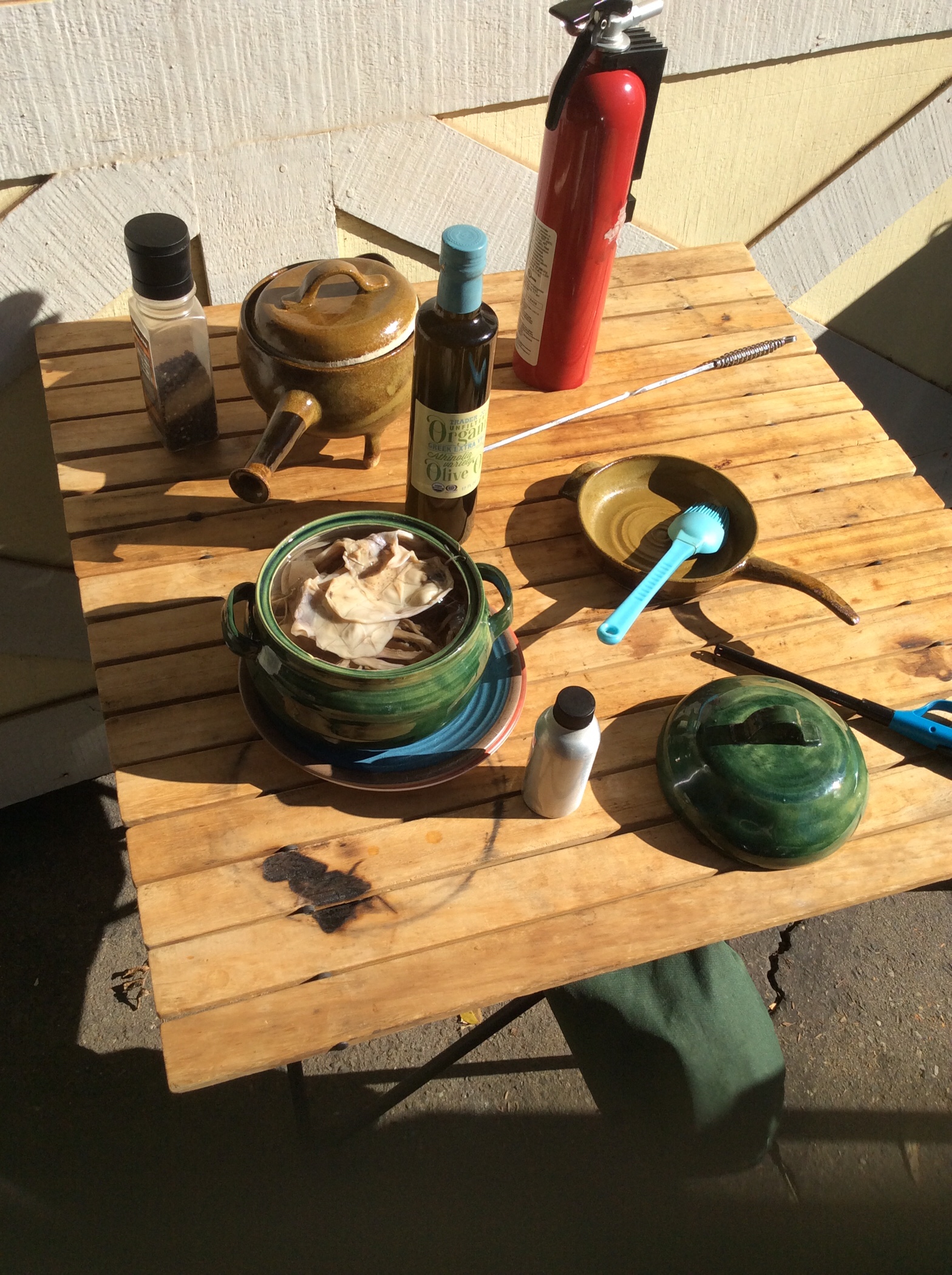
Last night, I put the rehydrated octopi in the lye, and left it in the fridge overnight. Today, I put my firebox together, assembled olive oil, black pepper, tools, and such and got to work.

Yes. A fire extinguisher is by definition medieval. Don’t argue, I live in California and it’s still fire season.

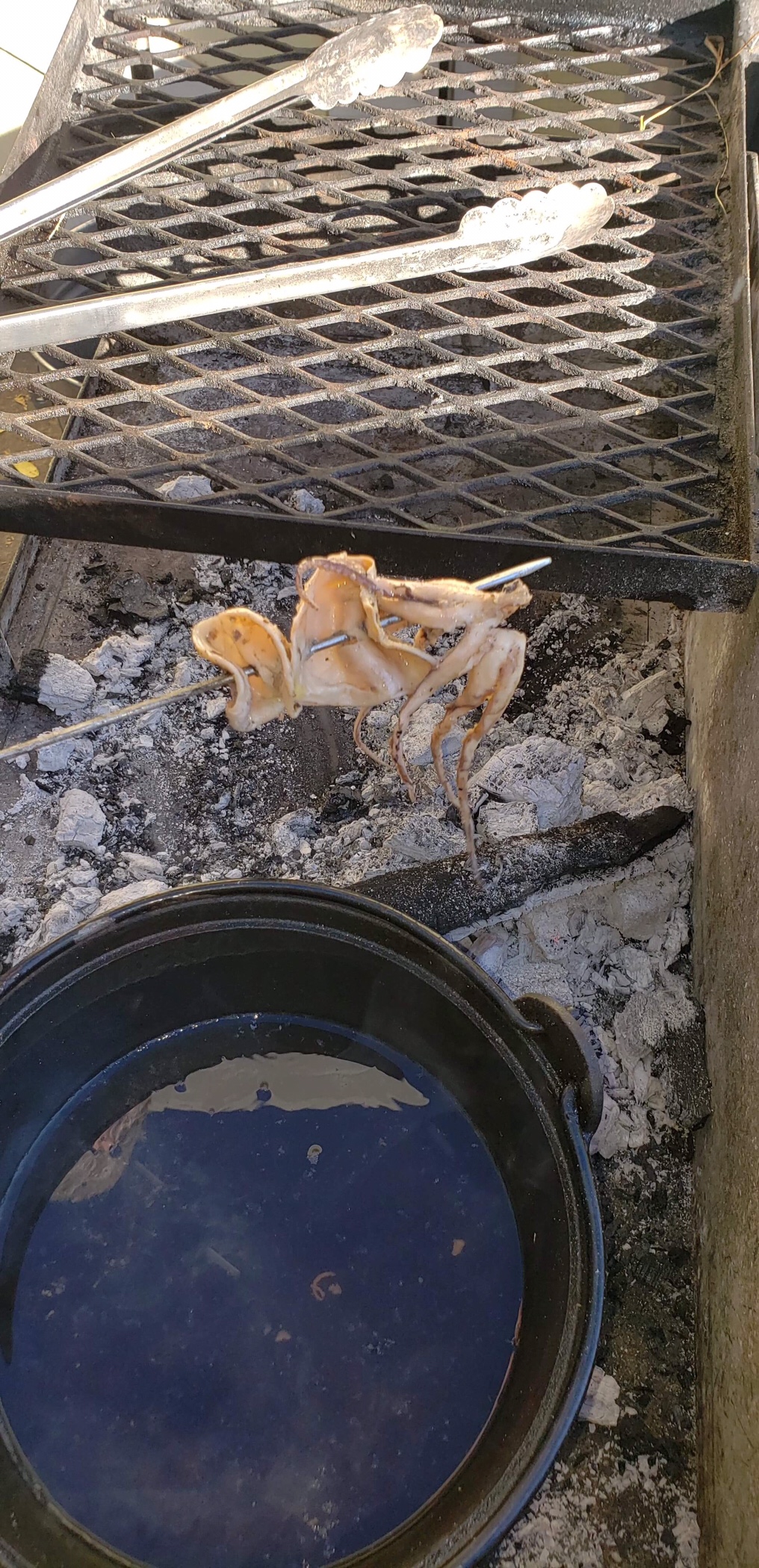
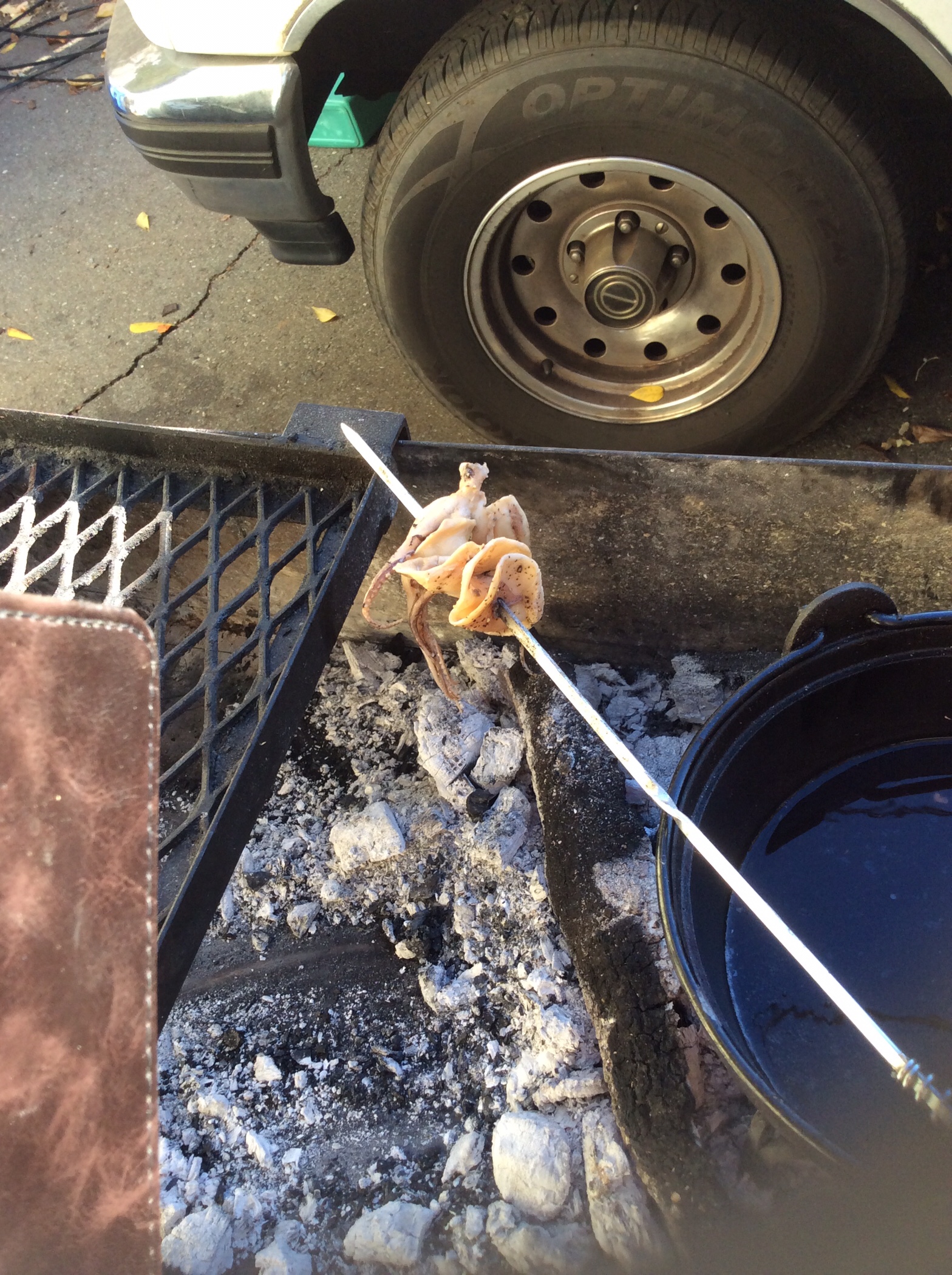
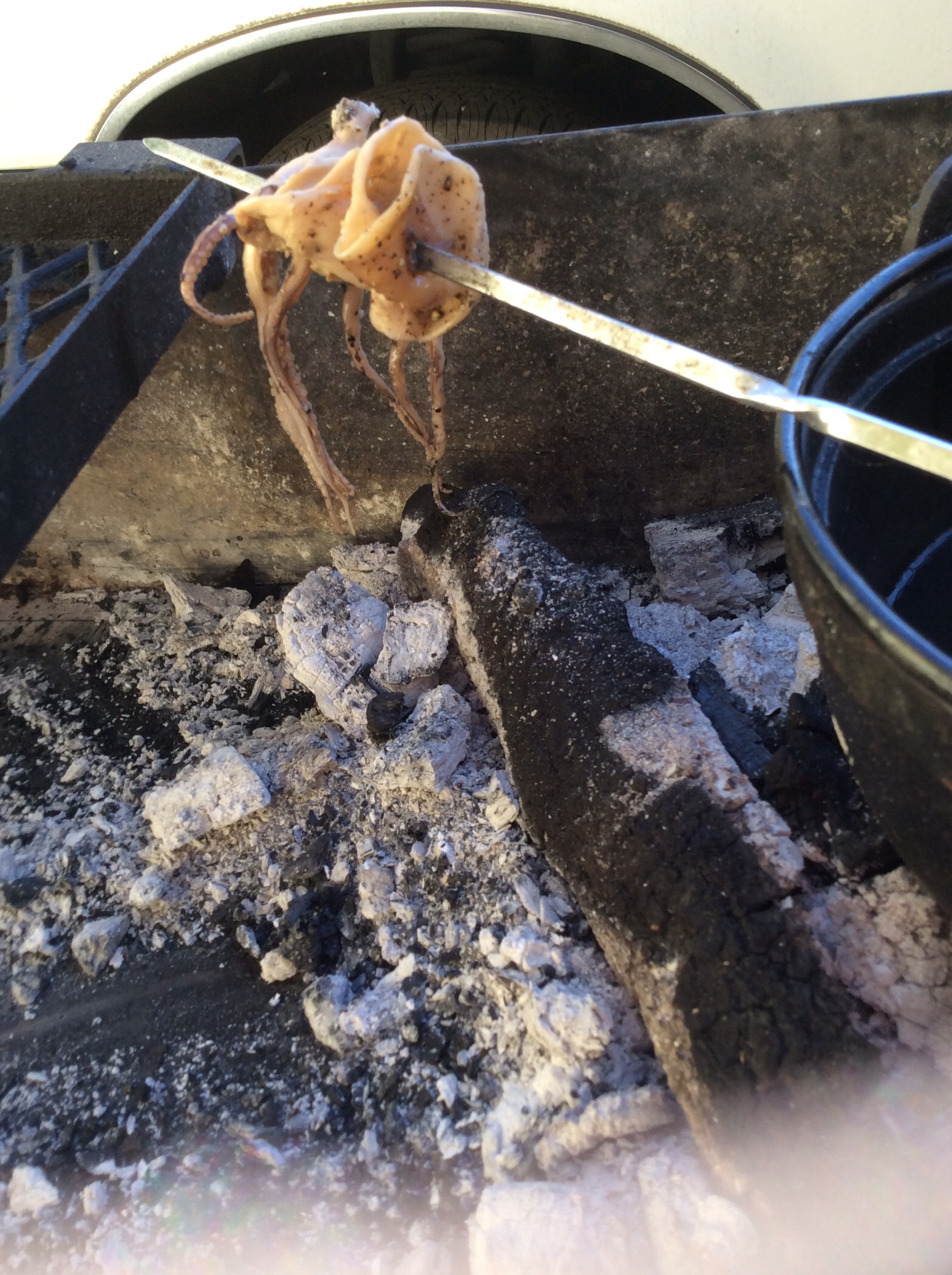
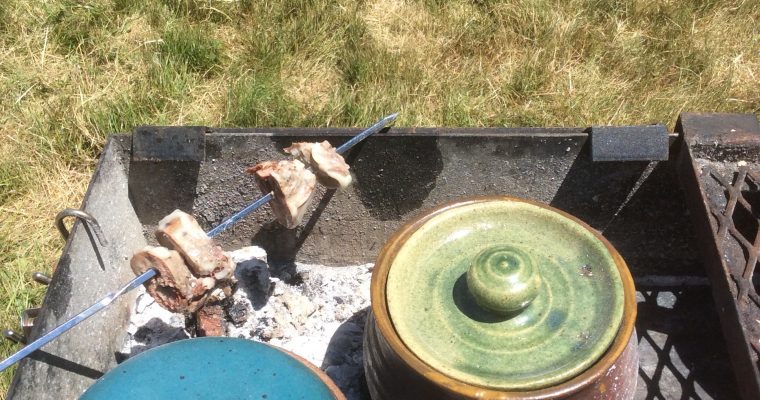
Here’s the thing. It worked -just- like the instructions said. No black skin formed until after the octopi were boiled. It rubbed off very easily. The head easily was skewered, the tentacles, not so much. Brushed on some tree oil (olive oil), ground some black pepper over it, and held it over the coals. When it looked like it was nicely heated through, off the skewer and into the mouth!

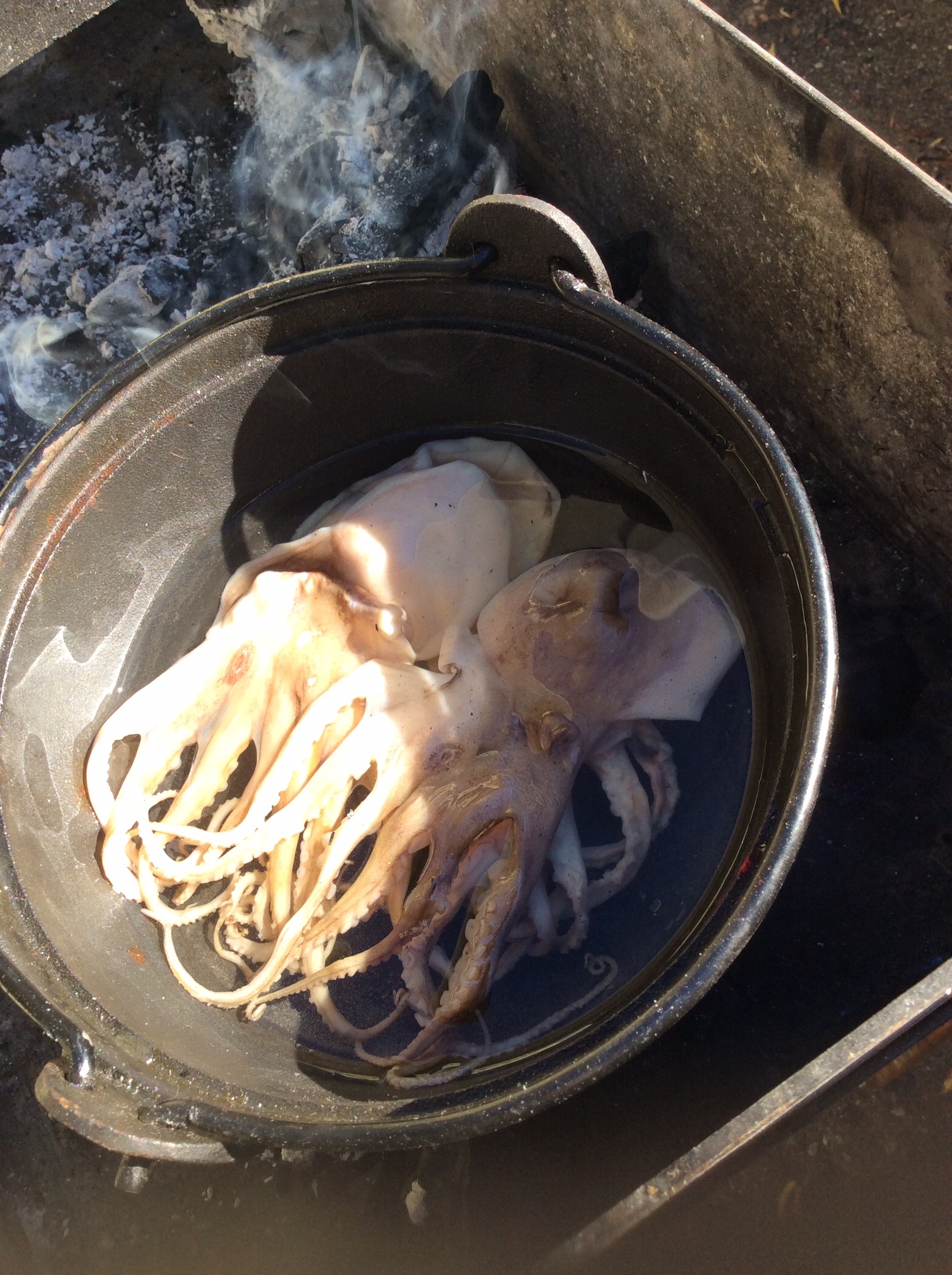
Here’s the boil…

See the little bit of “black skin”? Bit of a membrane, is all.

Watch you don’t burn the tentacles!

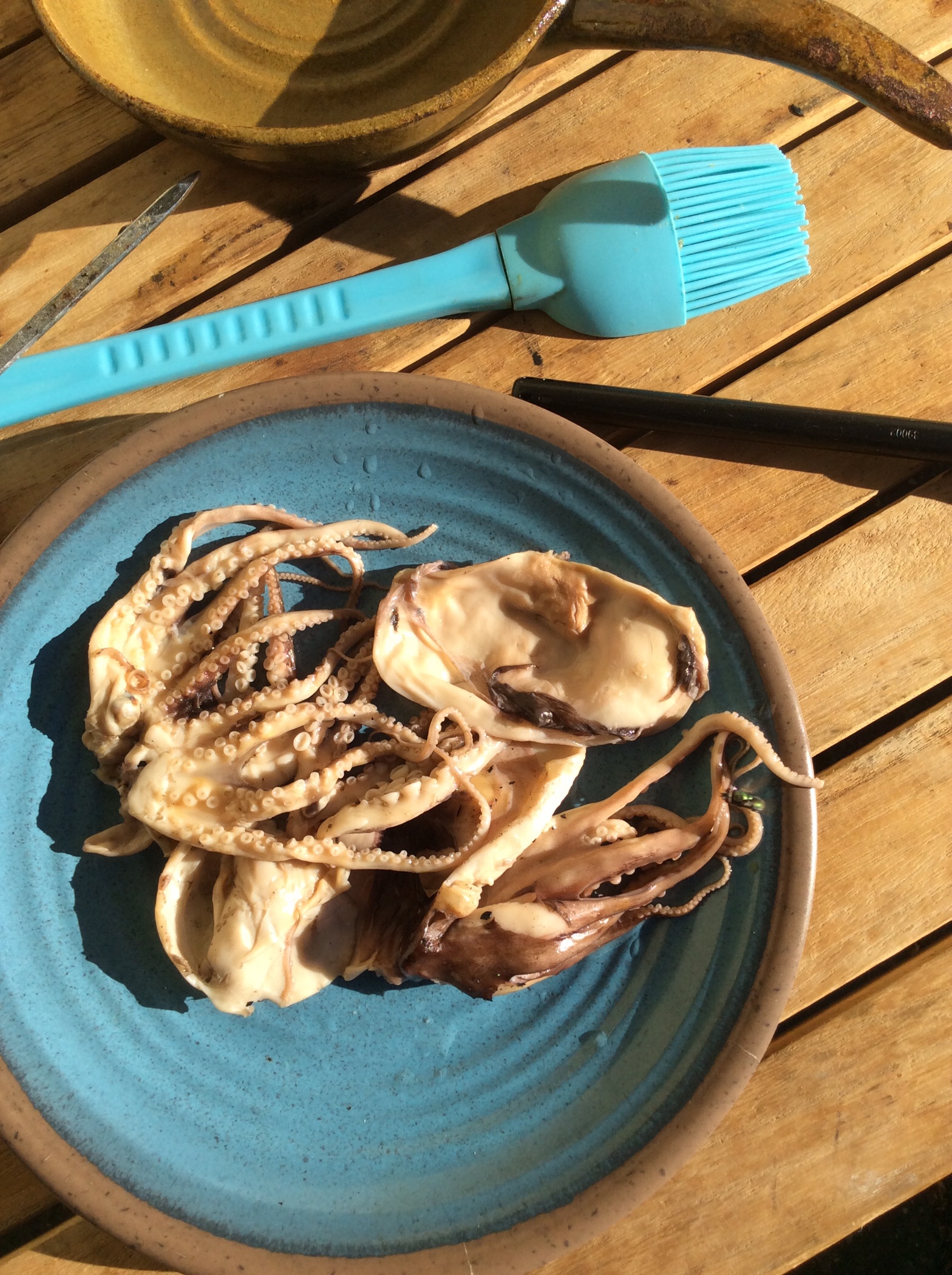
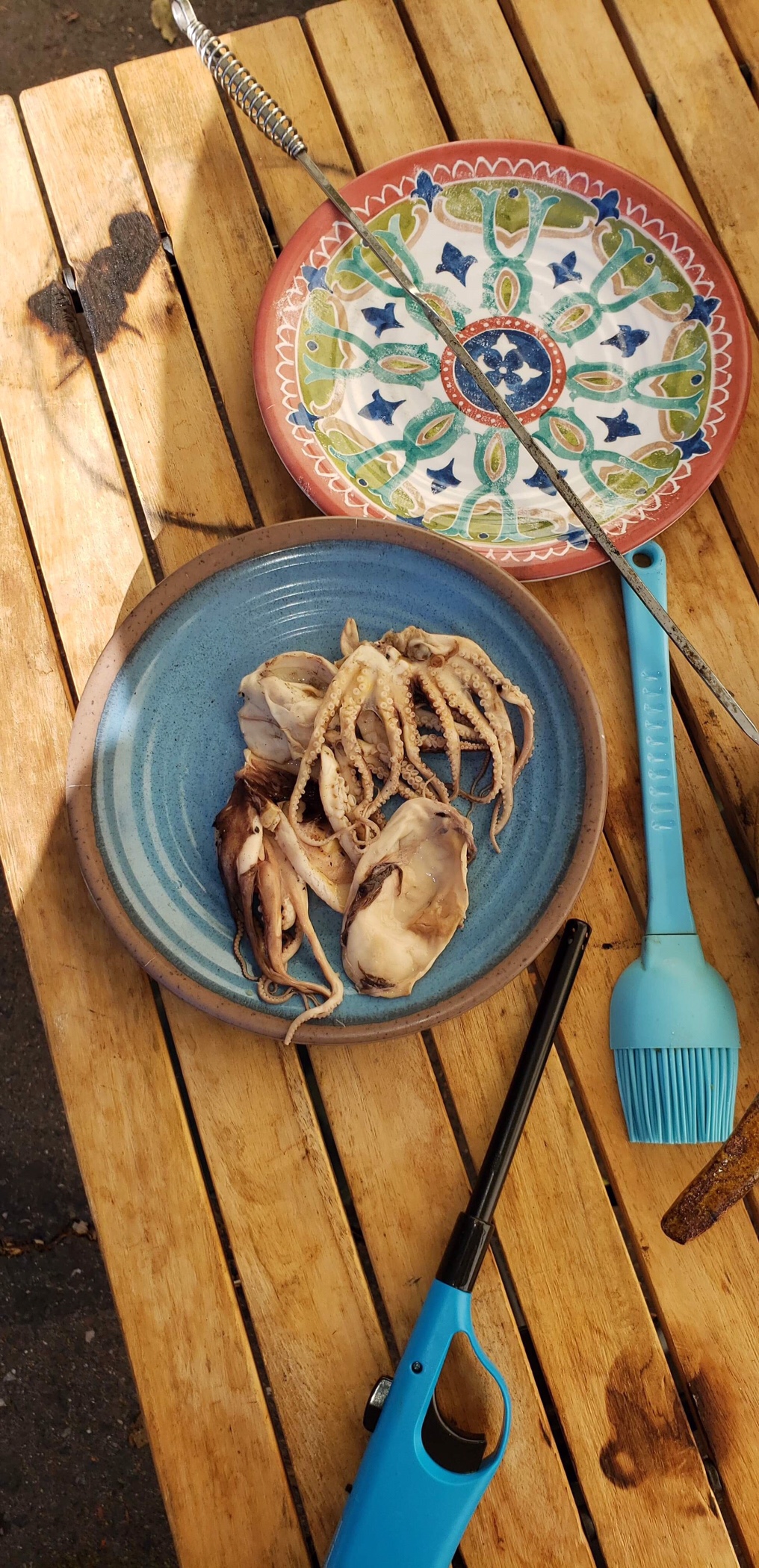
The whole Head of an octopus rehydrated, lye treated, boiled and roasted. Not very big, is it?

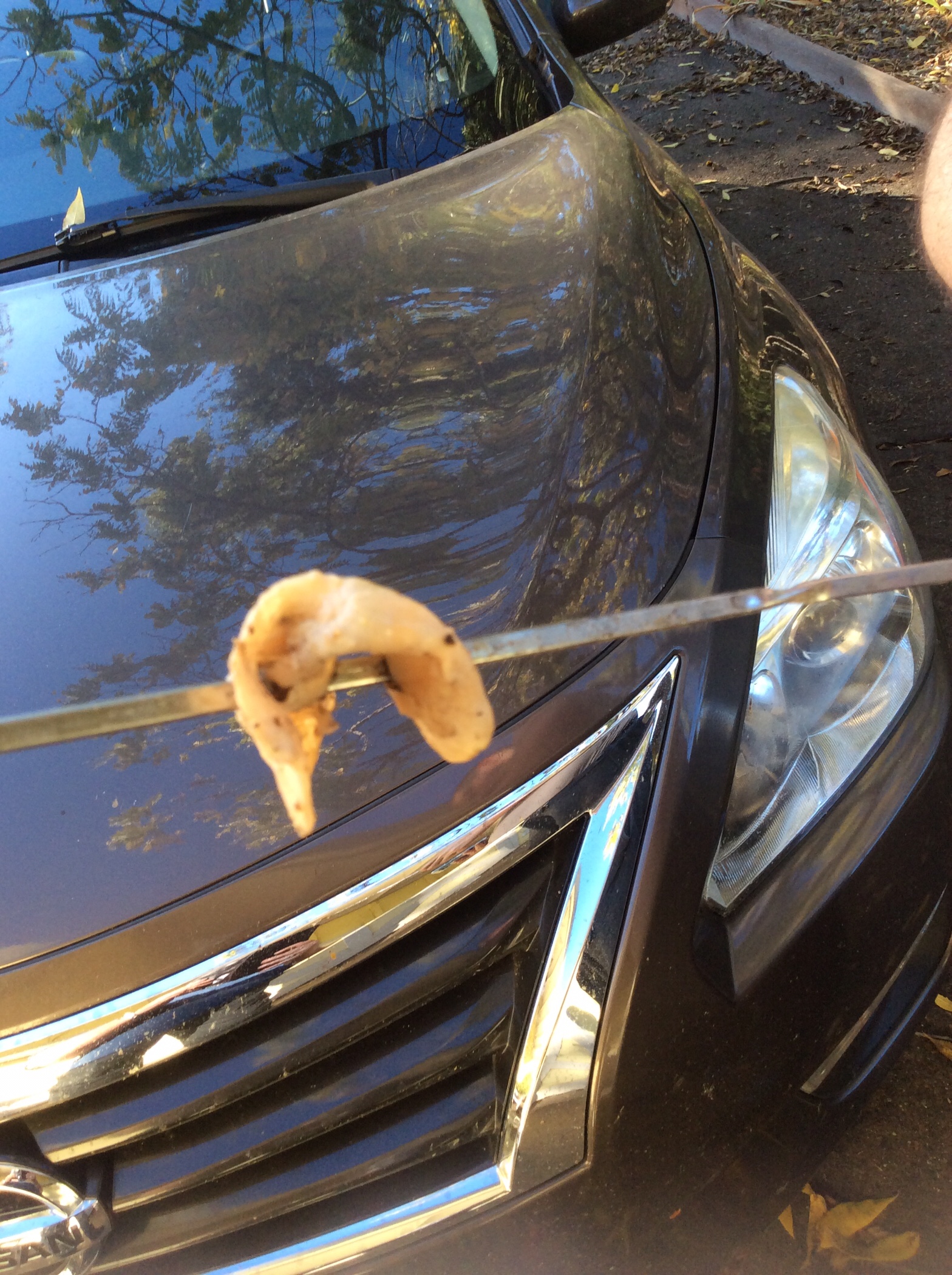
Open wide!

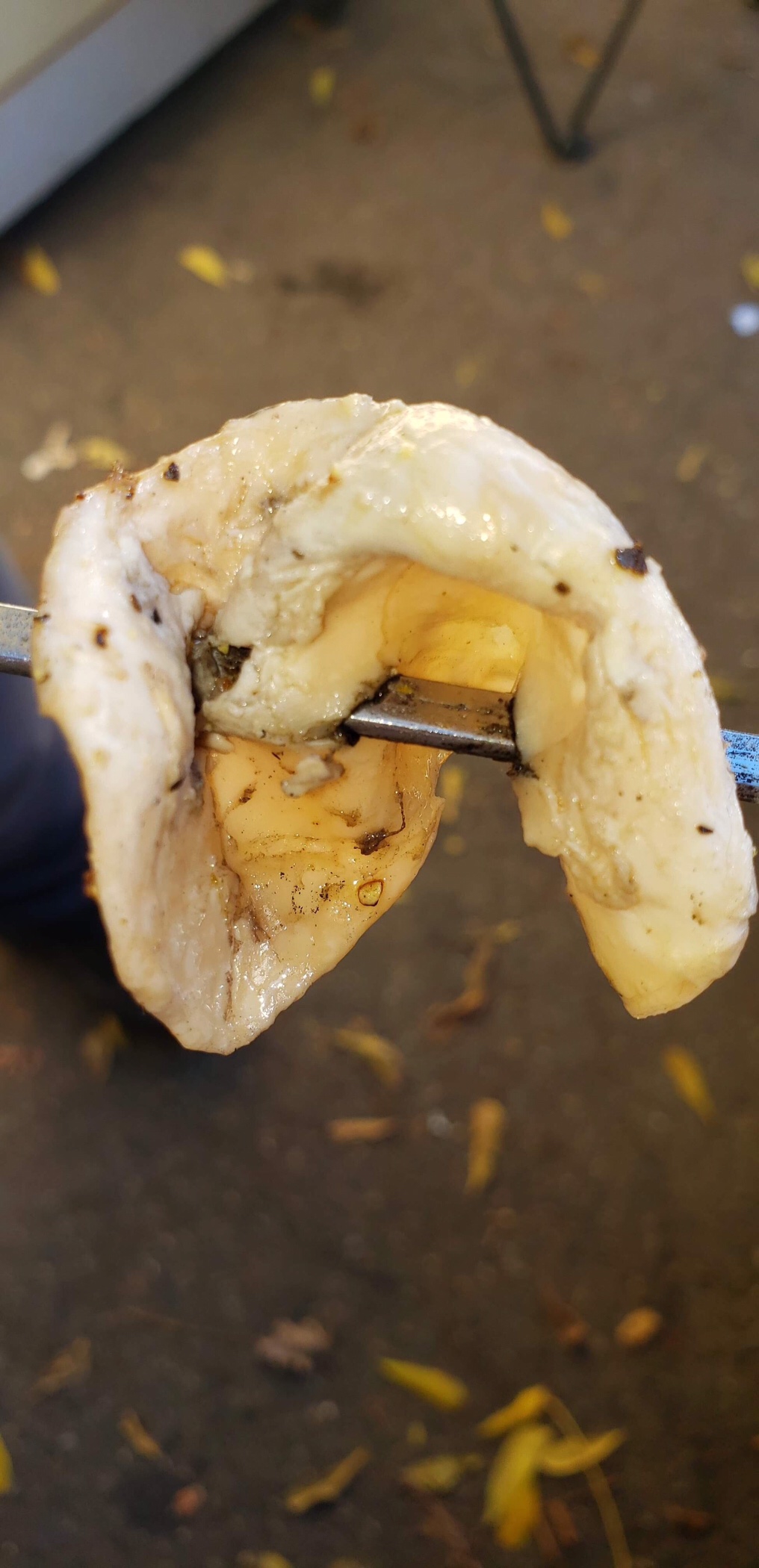
So, now you’re wondering, what was it like? I confess, I had imagined it would become some gelatinously mushy, meaty gel thing. It didn’t come out like that at all. The tentacles were a little chewy, not bad, mind you, but that’s where the muscles are. Nothing was jello-y at all. The head was actually rehydrated quite well for something that had the thickness of construction paper to start.

Taste? It was…rather like cod or sole…some fairly bland white fish. Royce, pictured above, and I agreed it could use a touch of salt! If I’d cooked it over the fire longer, it might have gotten a touch crispy around the edges…so a combination of fish and chips? Probably not. Longer over the fire is generally a bad idea with a lot of sea-life unless you’re going to cook it a LOOOONG time.

What did I do that wasn’t period? Primarily, I kept it in the fridge when rehydrating for safety. And the octopus had some sulphates in it that you wouldn’t find in period. I also used it as fast as I reasonably could, rather than leaving it on ice, as it says we can. If you want to go nuts, I also didn’t time days and nights at that latitude in the times octopus would have been available. But it talks about doing it in summer, and summer is just about done-ish now…good enough.

My cooking methods were as medieval as I could manage, and there is nothing a period cook would have found out of place in the preparation of lye (except trying to explain the concept of pH would be a challenge). You can see I got out my pipkins, and natural hardwood charcoal is the period cooking fuel of choice.

Was it exceptional? No. Would I refuse to eat it if it showed up on my plate? Not at all! I will say, that after trying this, the recipe before, with less detail, interests me more. It tells you to cook it in “oily sauce”. As it happens, there are three basic oily sauces given…one that basically cabbage broth with olive oil, one that shows up with a lot of dried fish which is vinegar, wine, honey, and olive oil. And one that’s the same, but with grapes, chopped apples, and dill! Those are some decently strong favors for something that is fairly bland. So, since I have some left over, and in fact a whole package that hasn’t been rehydrated yet…I might not be done with tentacles yet!

So, questions? Comments? Ready to send me off with a jacket that has sleeves in the back?

We are committed, and that’s no lye!

We are committed, and that’s no lye!

I love much about my job. Especially on days like today, because you see, I have a flex schedule, and 4 ten hour days, meaning Fridays off every week. This is relevant because when you have a big project, like doing 72-hour short ribs in 

How far is far enough?  Scary far!

How far is far enough? Scary far!

Okay. I know I can be maybe a trifle obsessive when it comes to cooking medieval recipes. It’s not enough to be actually cooking dishes based on sometimes-fragmentary and unhelpful recipes that are occasionally not even in anything resembling English, but then I have to 

Learning about the past from the more recent past

Learning about the past from the more recent past

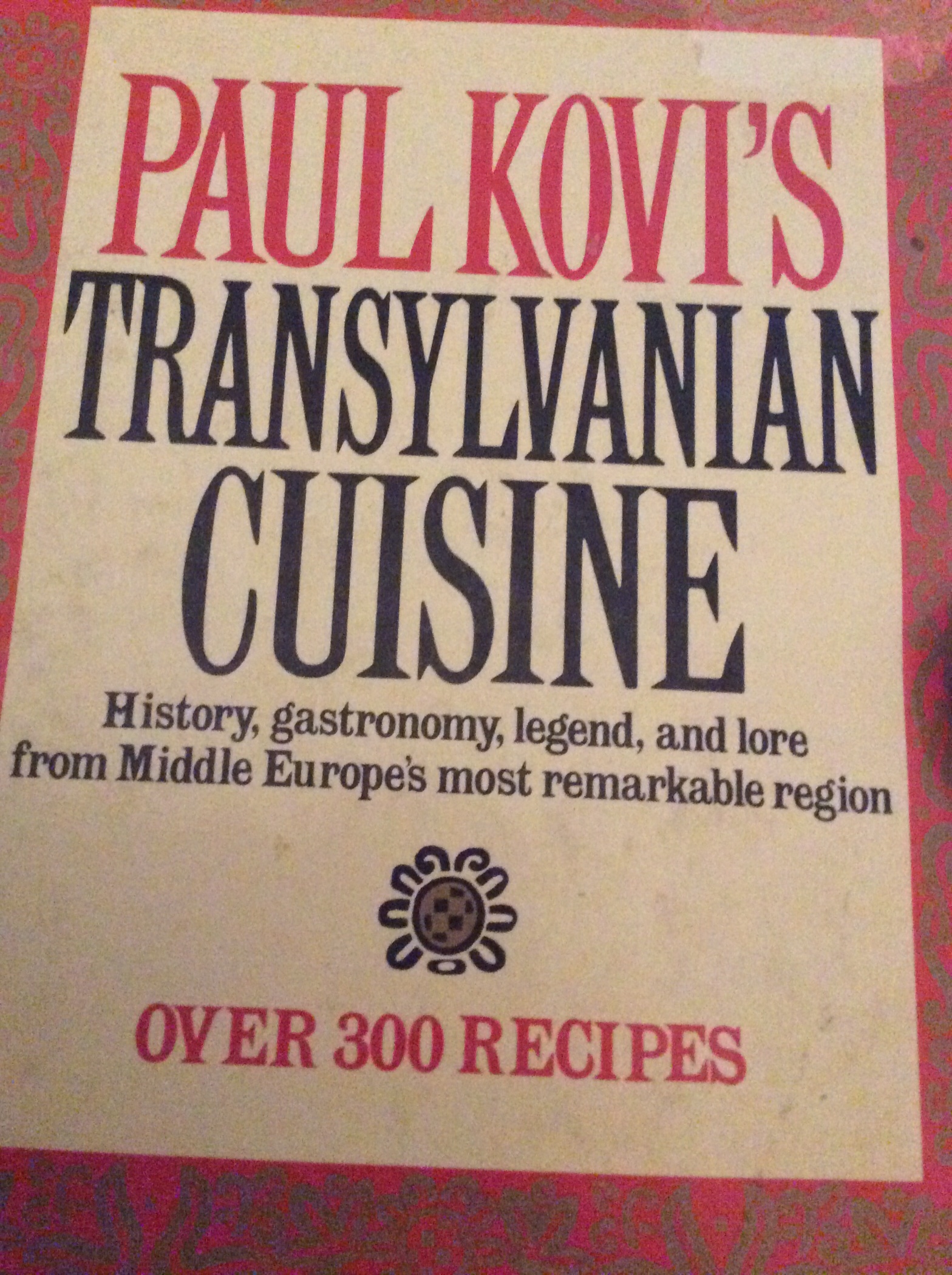
So, my friend Kerri was out at the Pennsic War this time around (yes, I’m jealous), and shopping is nearly as big a sport there as whacking your buddies with a stick. She came across this book, purporting to be a collection of Transylvanian recipes, history, and such.

Of course, my one advantage to being not at Pennsic is I have way easier Internet access, and I was able to find the same book for less on Amazon.com. So I ordered it, and have started reading.

So far, it’s been educational, but not in the way you might think. It was written in 1984-1985, and it’s full of good reminders. First of all, fellow historical re-creationists, remember that books are not AUTOMATICALLY your friends. Just because it’s in print doesn’t make it true.

Our author here has espoused a belief that Transylvanian cooking is one of the foundational cuisines in the world. Oooookay. He’s also convinced China had an influence on early Transylvanian cooking…based entirely on the “fact” that early China and post medieval Transylvania both had a fondness for little hot peppers…and as far as I know, they’re not the same species of pepper.

And…the recipes. I’ve barely started looking at them yet, but I have spotted some things that are similar to the some of the dishes in The Science of Cooking…but it’s really important and educational to remember that in such a book “really old recipe” doesn’t mean medieval, it means from Gramma’s 3×5 cards tucked into a book somewhere.

What’s been good so far? Maps, discussion of geography, and some of the ethnic composition of the Transylvanian region. I’m hoping there’s more solid history (and, maybe, a bibliography?). More hopes…if I can see descriptions of food items that I can link to The Science of Cooking, I can maybe get more clues about items I only have vague descriptions of. Like pogasca and some of the foods identified as cakes.

Okay, got more to read. More later. And, as soon as I get the chance to try it, the octo-lutefisk!

Day Four—Saturday

Day Four—Saturday

This is also known as “Cook All The Things” Day, and it’s kind of bittersweet. No one holds back, but that’s because we have to pack down and go home the next day (actually, given the amount of sheer stuff we have, most of us 

Day Three—Friday

Day Three—Friday

Yeah, now I was hitting my stride. So was everyone else. Friday at the War for the Cooks’ Camp generally means Fish Friday (so very medieval), though there’s no requirement to do it if you’re not into fish. Since dried octopus wasn’t to be found 

Day Two—Thursday

Day Two—Thursday

Wait, you might cry, what happened to day one? Day one was Wednesday, aka set-up day. And when you have a large pavilion, a huge pile of gear to move from truck to ground, and from ground to where it goes, plus the bed, stuff for the outdoor kitchen space and my own personal in-pavilion kitchen space to set up, it takes a while. Plus helping out ones neighbors as one should do. Plus the four hour drive from Grant’s Pass, and getting back into town for dinner and getting a few extras at the local market. So yeah, cooking-wise, Wednesday was a bust, as it always is.

But day two, we get rolling. Sure, we have to unpack our supply of pipkins and rummage through the ice chests and dish out our recipes, but that’s why we are here!

So, here’s what I cooked on Thursday.

I first tried something not strictly period…I mean, I’m sure it is, but it’s not documented, since I was otherwise working more or less exclusively with the Transylvanian cookbook, The Science of Cooking, this time around. I had this big honking pork shoulder, bought for cheap. So I deboned it, and butterflied a section of it out, and then mixed up some sausage that was intended for dinner the night before (but we went out instead) with eggs, some spices, and some breadcrumbs. The idea was to roll the pork around the filling, tie it up, and roast it over the fire. Alas, it just never came together because the piece of meat was too small and since I was still working slowly I eventually disposed of it because it had been out too long. It probably would have been okay, but dealing in probably will get you sick at so3 point. No big loss. No picture either, which is fine because it was ugly.

Second, ah, a recipe! The Garlic Harvest Sauce is probably my favorite sauce in the whole manuscript, which is good, because it’s used so often. So, this time I did it with the remaining pork, and for the first time I did it using truly period cookware…I.e. in a Pipkin over a fire.

Twelfth. (151) Pork with harvest sauce.

Prepare the pig like I told you to. After the meat is tender, slice some onion and parsley leaves. When serving it, make harvest sauce. Don’t forget to add spices.

Not overly informative, no, but recipes (2) and (3) from the manuscript give very solid details on how to make harvest sauce. And see my earlier post on making it with beef on A Tale of Two Weekends. Since I was making a large pot of this, I made rather a lot of the sauce,and honestly, I should have grabbed two more eggs from the care basket that Tallina sent up to the War (period nut candies, unripe grapes for verjus, a dozen and a half free range chicken and duck eggs, rice flour, GOOD local olive oil…). Her eggs were great golden and tasty, but I needed a few more than I used to properly thicken the sauce. So, what I ended up using was:

3 pounds pork shoulder, sliced into smaller pieces, simmered in 6 cups water to make a pork broth with the pork cooked tender.

5 duck eggs beaten with 1/4 white wine vinegar

3 parsnips (in place of the parsley root)

Half a yellow onion

Leaves of half a bunch of parsley, chopped

Ginger, saffron, and black pepper to taste

Salt to taste

This ended up being one of my contributions to dinner that night and was enjoyed, especially by our post-dinner visitors.

Picture: I didn’t get one, darn it all.

The other thing I cooked was:

Fifth. (86) Lamb with onion sauce.

Cook the meat like I told you; once about to serve it, slice it to the pot, and do this with the sauce: peel the onion, slice it on a clean table then put it into the pot, put clean beef (broth) on top of it, cook it, and while it’s being cooked, add some vinegar, black pepper and pour it into a pot with the lamb, then serve it once both are ready.

And our author told us in the previous recipe how to cook the lamb–salt it, roast it over the fire until it was done, then hit it to knock the salt off. Now, I don’t know if the salt fell off particularly, but we did get some juices, which I dutifully put into the Pipkin with the four very large, amazingly tasty lamb loin chops (the site owner offered us his lamb for only the cost of having it butchered–an amazing deal, and talk about terroir!).

So, about two pounds of lamb, an onion and a half (diced with the lamb), about three cups of beef broth (made with Better Than Bullion…awfully convenient stuff, that!), and a quarter cup of red wine vinegar. Pepper to taste, maybe a teaspoon or so. Simmered a couple of hours and also served at dinner.

I would happily eat this again. And not share it.

Meanwhile, our resident artificer, Aram, had started working on the oven…

Purely for the amusement value

Purely for the amusement value

When I tell the story of how the Transylvanian Cookbook came to be, I make sure to mention the first translation of the recipe titles. Not having anyone handy who read fluent Hungarian, we fed the webpage listing all the recipe titles into Google Translate 

3.0 Inbound!

3.0 Inbound!

So, what with all the SCA wonderful weirdness hitting my life this second, I felt the need to actually wrap up the 3.0 edition of the Transylvanian Cookbook. This is, realistically, probably the last major update I’m going to do. If I start doing more 

A tale of two weekends…

A tale of two weekends…

So. Last weekend we had a local SCA event. I was going to keep it simple. I was going to reprise those fried cheese sticks because yum, and a bunch of friends wanted to try them, and I was also going to do the Bird Sauce from the Transylvanian Cookbook over a Ye Olde Costco Rotisserie Chicken.

Hen with bird sauce.

Remove the feathers and wash it like I told you to. Put it on a skewer like the capon. While being roasted, make the sauce; take some wine, if you barely have any wine, then use water from boiling beef or regular water; add some bread; cook it, pass it through a strainer, add apples and grapes; once the hen is roasted, take it down from the skewer, cut it in the sauce, add some saffron, black pepper and ginger. This should be a more sour than a sweet food. They call it bird sauce for its wildness. Chefs nowadays put almonds into it, but it is not a necessity.

Easy, right? Take a few pictures so you could see the Microkitchen in use…a fun and relaxing time. But that’s not what happened. The Queen of the West showed up, and in amongst the fun and silliness, she offered entrance to the Order of the Laurel to myself and my cooking partner Gwendwyn the Silent. If you’re SCA, I don’t have to say more. If you’re not, I don’t know if I can explain it, but it’s a very big deal which is why I was too shaken that day (that whole weekend) to dare to play with hot oil or sticky liquids with a tricky and slightly top-heavy cooking rig with an alcohol burner.

This weekend was different. A friend had offered up her home for a weekend of cooking with the theme being the Transylvanian Cookbook. We were all going to make various recipes that interested us, culminating in a big dinner last night. Originally, the plan was to haul out the firebox and pipkins and REALLY do it right, but the weather forecast made us rethink the outside part, and Rosamund has a nice kitchen, so we used that.

Tiffany, Dorrie, Perrin, Rosamund–please post your recipes in the comments, because my fingers will be tired just with the stuff I did!

So, first off, Beef with Harvest Sauce. I’ve made it before, it’s a favorite.

BEEF WITH HARVEST SAUCE.

If you want to cook with a harvest sauce, prepare the meat like I told you. Put parsley roots, (parsley) leaves and onions into it. After it’s cooked, add six or seven eggs, according to your needs. After you’re done, put the eggs into vinegar and start whipping it. Then pour the meat’s juices into it. Pour it onto the meat again, but don’t boil it; if you boil it, its size will suffer.

I fried up some strips of beef, heated up some broth wherein were boiled onions and sliced, peeled parsnips, and parsley (yes, I know it calls for parsley root, and I’ve tried it that way before, but parsley root is hard to get, small parsnips were easy…and there is almost no taste difference). Beat eggs and vinegar together, and tempered that into the broth. Add the meat and heat to a low simmer. Done!

(And I forgot to take a picture of it)

Next up, Fried chicken. I love fried chicken. So watch out Colonel Sanders, Baron Gwyn is coming after you!

Fried chicken.

Do what I told you before. Cook it in salt, and once cooked, take it out and let it cool. Make salty pancake from eggs and flour, and when serving it, fry the chicken in this, put it into the pancake and serve it when hot.

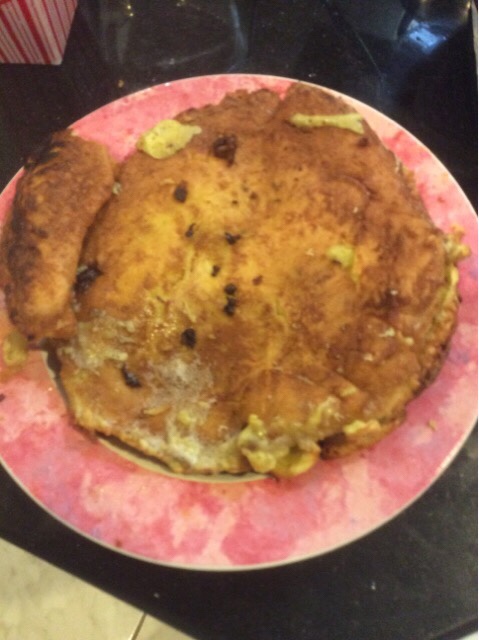
This was terrifically simple, and very tasty. Boiled some bone-in, skin on chicken thighs in salted water until cooked, pulled them out, and allowed them to cool and dry. Meanwhile I mixed a cup and a half of flour and a half-dozen large eggs with a tablespoon or two of salt. Mixed until smooth and no discernible lumps. The batter wasn’t particularly thick. Coated the thighs in the batter, and fried it in about a half inch of hot oil in a skillet, for maybe 3 minutes on each side until the batter was nicely browned. YUM! 5/5, will definitely do again! So, next time you’re tempted to bring a bucket to a medieval potluck, do it yourself! I reheated it for the dinner in a warm oven and it worked well. Chicken stayed nice and juicy.

It reminded me of the Persian fried chicken my friend Urtatim does.
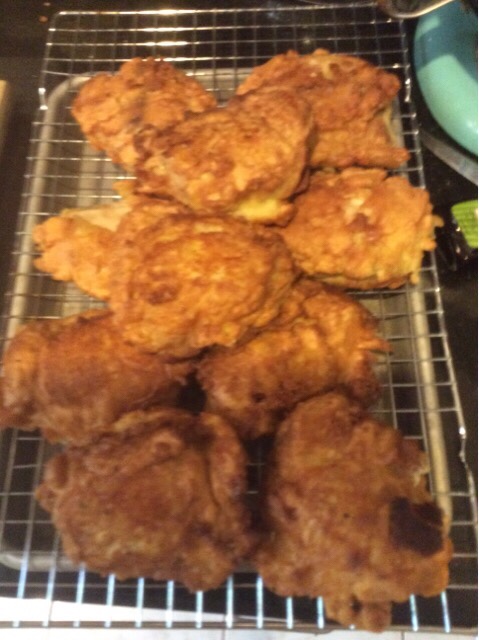
As a bonus, I still had nearly two cups of this batter left over, and the skillet still had hot oil. So I…dumped it in. They call the batter “salty pancake” right? Fwoosh! It puffed up, cooked in just a minute or two on each side, in a fashion not unlike a Dutch Baby. It was surprisingly good hot, okay cooled, and was tasty with cheese. Some onions would not have gone amiss, either. Just to be clear, nowhere in the cookbook does it say to do this, but it’s not unreasonable, in my opinion.
To use up the unused chicken from last week, which had gone into the freezer, I did Hen with Dumplings. This wasn’t my most successful dish, but that’s okay.

Hen with dumplings.

Wash it like before. When boiling the hen, cut out its breasts and add some salt. Make the dumplings like so; depending on how many chicken breasts you’ll make, take equal amounts of cow fat, parsley leaves, white bread without the crust, and eggs, whip it, and if you have no fat, fatty bacon will do.

So I cut the breasts out of the Costco rotisserie chicken and simmered it in broth to reheat (the broth from the chicken thighs, which, as you’ll recall, had salt). Set that aside. I then minced up some flat leaf parsley, pulled some white breadcrumbs out of a loaf, and rendered down some Hungarian bacon. And that is where things failed, I think. This particular bacon, bought at Pacific International Foods in Sacramento, was MUCH leaner than your run of the mill bacon. I added the few fat scraps from the beef in the Harvest Sauce Beef, above, but there was still very little fat to help bind it together. That, plus the meat from the bacon meant the dumplings just didn’t bind all that well, even when I added my last two eggs (plus one of Tiffany’s duck eggs!) to help bind it. The dish also doesn’t hold well. Oh, yes, and the dumplings were also simmered in that same broth. Still tasted okay, though.
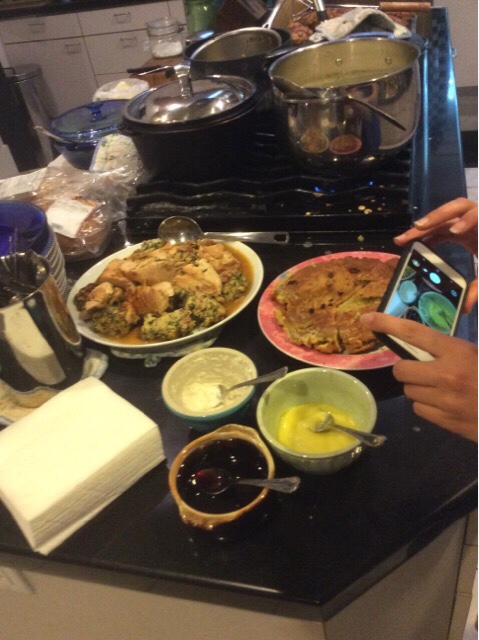
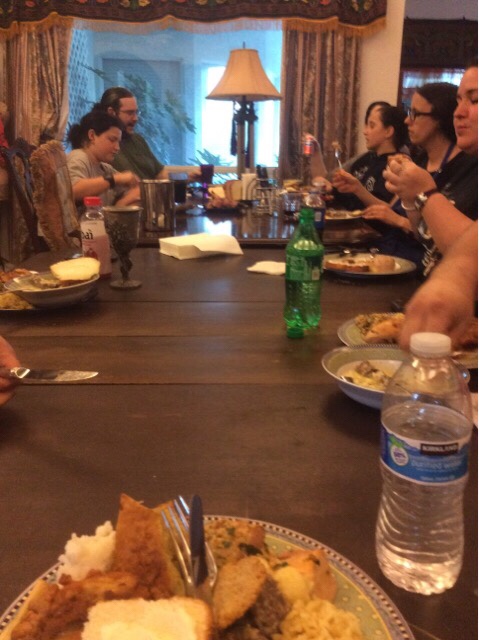
(The finished dish is the one in the center left).

Okay, Perrin? Now you have to talk about the Hen and Egg Doughnuts. Tiffany? Your sauces, beef with carrots, garlic cucumbers, and pottage of millet in milk. Dorrie? Your stuffed pears, almond cake, and THAT SAUCE. Rosamund, your Bianca…go!
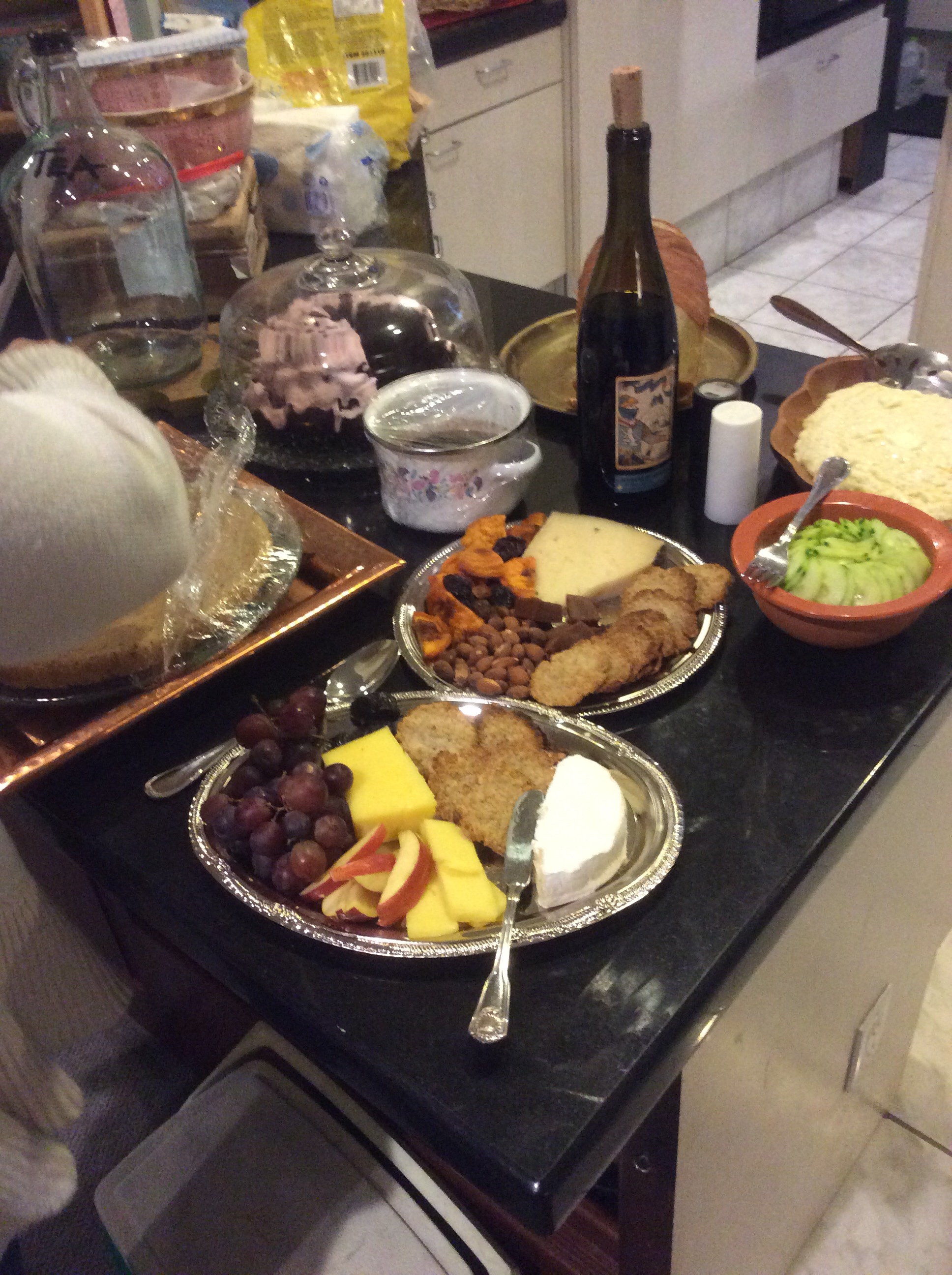
More pictures, from Tiffany:
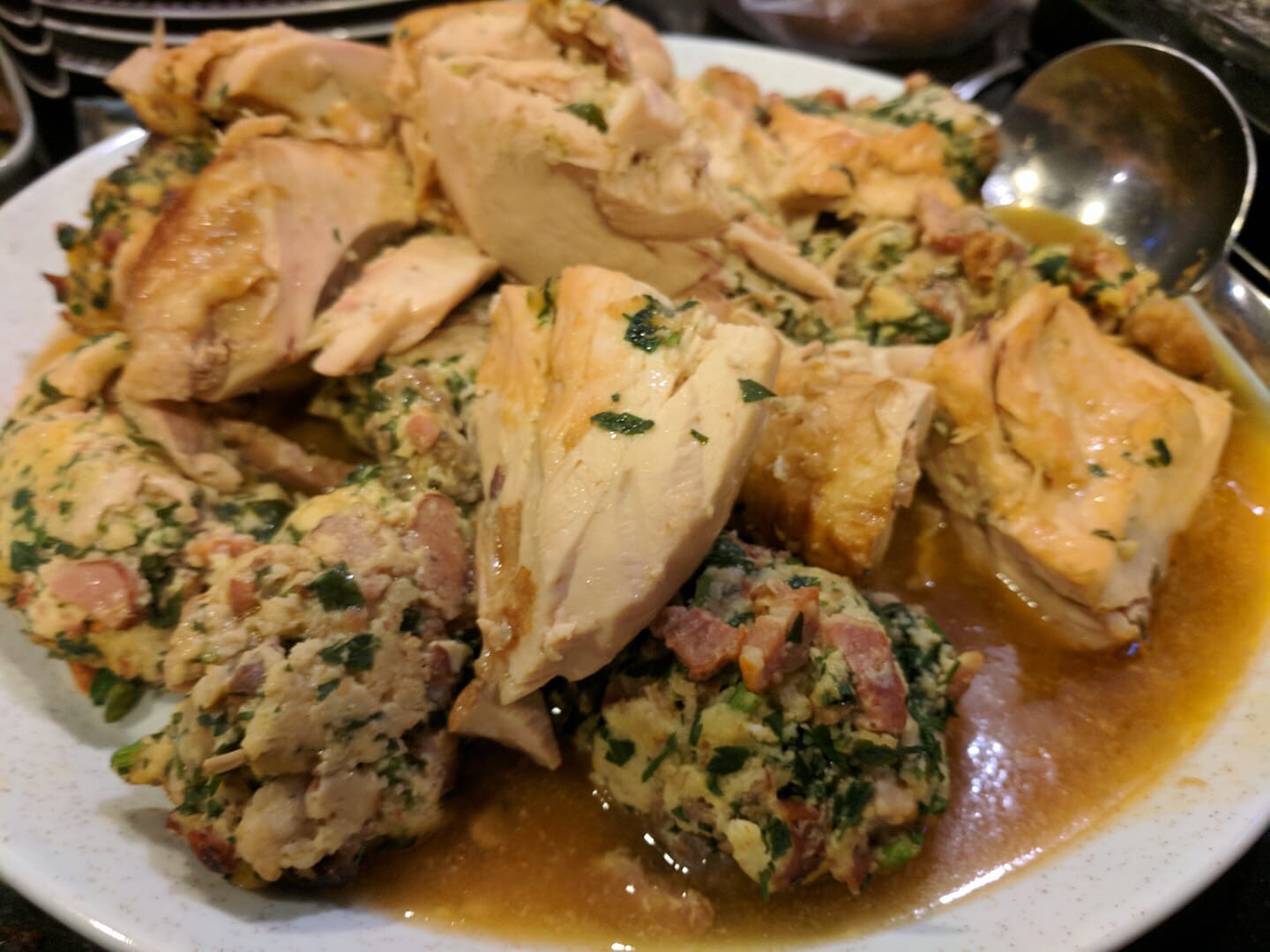
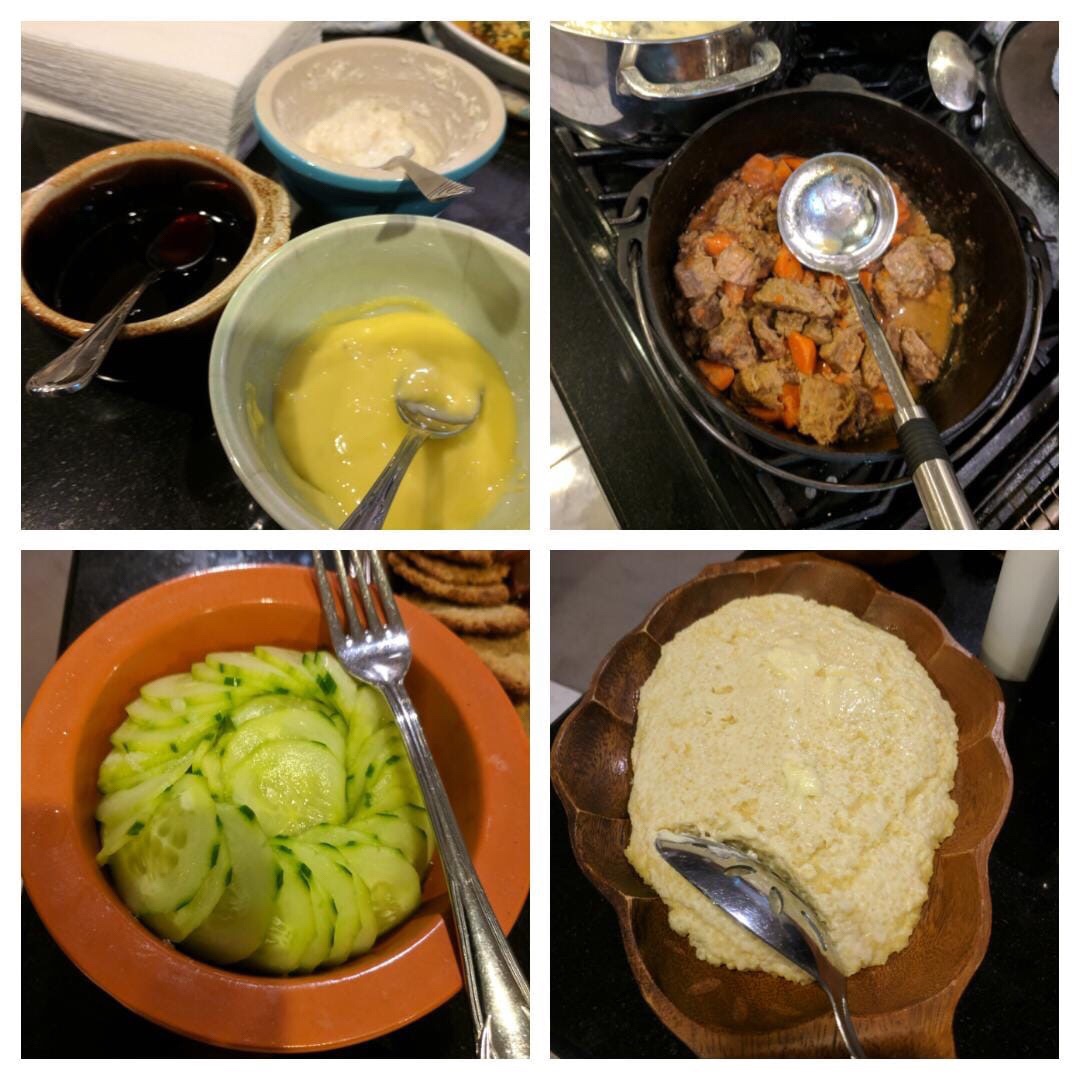
The first would be a better picture of the chicken with dumplings, the second shows her sauces (garlic aioli, and two others slipping my mind), her beef with carrots, cucumber salad, and millet porridge.

Yum!

A recipe for this weekend—Vetrece

A recipe for this weekend—Vetrece

So, after the boost to my cooking mojo from last week’s Culinary Symposium, I thought I needed to capitalize on that and play with the Transylvanian cookbook this weekend.  The two recipes for “vetrece” caught my eye just now. Tenth. BEEF VETRECE WITH BREAD Salt 

And to use your túró

And to use your túró

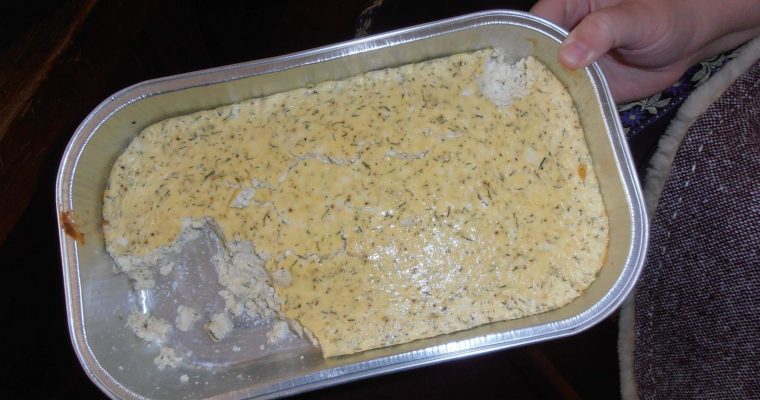
So, supposing you have gone to the trouble of making a batch of túró (not that it’s hard or all that troublesome).  What to do with it? Túró cake Crush the túró, whip some eggs, then add some dill, sour cream and butter.  and Dish 

Next recipes—Fellorium From Eggs, and Túró cheese

Next recipes—Fellorium From Eggs, and Túró cheese

The only cheese actually specified in The Science of Cooking is “túró”.  After hunting around for a description, I finally was able to get one from one of my translation checkers, who describes it as a very mild, unaged cheese  with no real curd formation, but its not ricotta, cream cheese, or cottage cheese, either.

And then I found online a recipe for making it yourself, which is lucky, because it’s not like I was about to find it in stores locally, or even my favorite Bay Area cheeseshops.  And it’s easy.

https://zsuzsaisinthekitchen.blogspot.com/2009/01/hungarian-curd-cheese-tur.html

As always, the better the milk you buy, the better the cheese you make.  That said, it works fine with regular pasteurized milk from your supermarket.

My version is basically the same, though leaving it on the counter two full days, then heating it in the oven at 175F for 8 hours (or overnight) gives a really rich cheese and pulls nearly all the cheese-proteins out of the whey.

Also, do not toss the whey.  In addition to all the usual stuff you can use it for (making bread and scones, feeding to livestock, drinking on a hot day, etc), there’s another Transylvanian recipe you can use it with.

Poach your eggs in it.  Oh baby, yeah.  It gives a mild cheese coating to your eggs.  You may want to cut your cooking time by 15-30 seconds, because it does cook the eggs a little more efficiently than plain water with vinegar and salt.  The source says:

105

Fellorium from eggs.

When you cook a dish with túró, take some of its liquid into a small pan or pot, when you want to serve the curd cheese dish, bring the bit of liquid to a boil, crack the egg onto it, but take care that the yolk doesn’t cook, but only the white, and even that only gently. Deal with this quite quickly, because if it hardens, it will not be good for anything. Put this afterwards one by one on the túró dish nicely, serve the túró dish thus nice and warm. When you put the fellorium on it, salt it lightly.